Affichage de 51–75 sur 257 résultatsTrié par popularité
Filter par maison d’édition :






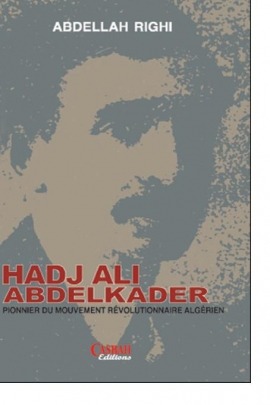
Hadj Ali Abdelkader, Pionnier du mouvement révolutionnaire algérien – Abdellah Righi
Trop peu de livres rendent hommage aux premiers militants révolutionnaires algériens, ceux du début du XXe siècle, dont les noms sont aujourd'hui, pour la plupart, voilés par l'ignorance ou l'oubli. En leur temps, ces hommes courageux ont déployé pour la libération de leur patrie une action à la mesure du péril qu'il y avait à s'opposer, même sur le terrain politique, à la domination coloniale.
Cet ouvrage est consacré à l'un d'eux, Abdelkader Hadj-Ali, dont de nombreux jeunes Algériens ignorent qu'il fut un pionnier du mouvement révolutionnaire, « le principal fondateur de l'Étoile Nord Africaine » et « le mentor de Messali Hadj ».

Le FLN – Documents et histoire 1954-1962 – Gilbert Meynier
Ce recueil de documents et de textes est conçu comme une suite à l'ouvrage de Gilbert Meynier, Histoire intérieure du Fln, 1954-1962 (Fayard, 2002, Casbah Éditions, 2003). Destiné à tous ceux qui veulent faire le point sur le conflit franco-algérien et la gestation de l'État-Fln – selon l'expression usitée en Algérie –, il permet au lecteur de les découvrir et de les évaluer par lui-même : la place de la guerre, la terreur, la vie du Fln et de l'Aln, l'attitude du peuple algérien face à l'épreuve, etc., sont présentées en toute clarté .
Le rôle du Fln est resté longtemps prisonnier des récits hagiographiques ou malveillants. Chacun sait que tout mouvement porteur d'un projet d'émancipation a besoin, souvent au prix de manipulations historiques et de désinformations, de transformer son idéal en religion en vue de susciter des dévouements et des sacrifices. Le Fln ne fait pas exception à la règle. Son succès a bénéficié des souffrances infligées aux Algériens par l’armée française et engendré une vision idyllique de son action. « De part et d'autre de la Méditerranée, note Mohammed Ramdani, et non certes pour les mêmes raisons, on a assisté à la mise sous scellés, on a décrété le silence et l'oubli de peur que la sulfureuse anamnèse n'en vienne à désuturer les traumatismes, revisiter le paysage dévasté, rompre le règne de l'amnésie et forcer les relectures. »
L'état de nos connaissances a cependant progressé. « Les bouches s'ouvrent. »
Dans les années 1970, la légitimité de la cause du peuple algérien reconnue, on a commencé à prêter attention aux contradictions et aux tensions que le triomphalisme du Fln dissimulait. Des versions nouvelles de la période 1954-1962 ont vu le jour, en France plus qu'en Algérie même où, malgré des avancées, l'histoire reste « sous surveillance ». L'état des sources est devenu plus favorable aux chercheurs. Cet ouvrage en témoigne
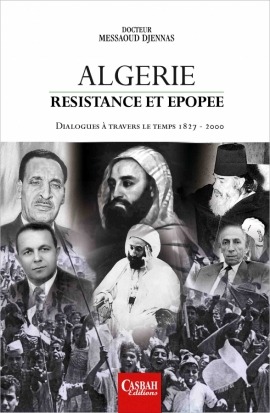
Algérie, résistance et épopée – Messaoud Djennas
« Du mysticisme qui a imprégné le grand stratège militaire, l’homme d’État, le poète et le philosophe que fut l’Émir Abdelkader, à l’islamisme conquérant et dominateur, sous le ton doucereux, d’un Abassi Madani, en passant par le nationalisme révolutionnaire prolétarien de Messali Hadj, le réformisme humaniste et légaliste de Ferhat Abbas, la rigueur révolutionnaire et moderniste de Mohammed Boudiaf et de Abane Ramdane, le verbe exubérant et généreux de Ben Bella, face à la froide austérité et à la détermination de Boumediène, le réformisme de Ben Badis, adossé à un nationalisme religieux intransigeant, flirtant néanmoins parfois avec l’assimilationnisme, c’est toute une galerie de personnalités hors du commun, dont le rôle d’acteurs historiques de premier ordre est aujourd’hui souligné et admis par tous les historiens qui est présentée dans cet ouvrage sous une forme dont l’originalité ne fait pourtant à aucun moment perdre de vue la vérité historique.»
A la recherche de notre histoire – Djillali Sari
L'histoire doit occuper une place privilégiée dans toute éducation destinée à la formation des jeunes. Pour autant, faut-il continuer à enseigner l'histoire telle qu'elle l'a été durant toute la période de la pensée unique ? Ni officielle, ni événementielle, l'histoire doit appréhender le passé dans sa globalité à travers ses différentes expressions archéologiques et architecturales.
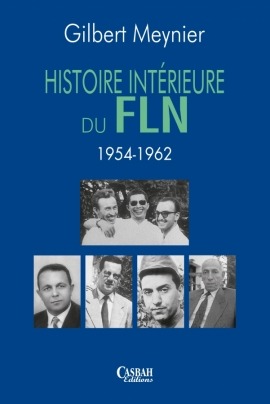
Histoire intérieure du FLN 1954-1962 – Gilbert Meynier
L’un des meilleurs moyens d’éclairer le tour implacable qu’a pris la guerre pour l’indépendance algérienne est d’étudier minutieusement - et sur toute la durée des «événements» - les débats, voire les conflits qui ont parcouru la nébuleuse nationaliste dans la clandestinité et en exil : comment le FLN s’est-il construit ? Le mouvement de résistance a fini par fédérer (ou dominer) les tenants d’une Algérie libérale, d’une Algérie socialiste, d’une Algérie libertaire, d’une Algérie islamiste... Les rapports de force changeants entre les dirigeants, les appréciations divergentes sur les priorités tactiques ou stratégiques ont influé sur le déroulement de la guerre et, à terme, sur la physionomie de l’Algérie indépendante (les drames que connaît aujourd’hui ce pays trouvent là une partie de leurs causes). Apparaissent des personnages devenus célèbres, comme Boumediene, Ben Bella, Belkacem Krim ou Mohamed Boudiaf, mais aussi bien d’autres qui ont joué un rôle capital bien que l’histoire les ait laissés de côté.
Somme exceptionnelle qui repose sur un travail d’archives considérable, sur la consultation d’innombrables documents (en arabe et en français) ainsi que sur de multiples Mémoires d’acteurs, sans oublier les recherches des historiens, ce livre renouvelle entièrement un sujet jusque-là biaisé par les passions ou franchement
ignoré. D’une grande probité intellectuelle, il passionnera à la fois les Français et les Algériens, en particulier les anciens combattants des deux côtés.
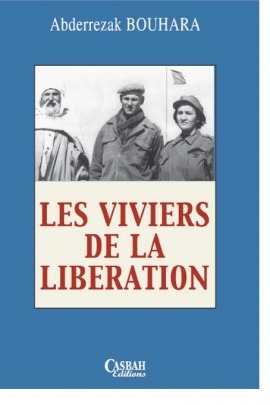
Les viviers de la libération – Abderrezak Bouhara
Les viviers de la libération… n'est pas un récit autobiographique, mais un recueil de témoignages, de notes, d'impressions, de souvenirs sur la résistance, glanés et consignés, ici et là, s'étalant du 5 mai 1945 à 1962. Il s'agit d'un regard sur la résistance et la guerre de libération d'une génération et sa perception à travers un prolongement actuel. »
El Watan.
« Avec son témoignage sur la lutte pour l'indépendance en tant qu'acteur et témoin, Abderrezak Bouhara, ex-officier de l'Aln, interpelle sa mémoire et revisite son parcours pour mieux nous restituer le contexte socio-politique qui prévalait avant le déclenchement de la guerre de libération nationale, et nous livrer, avec une colère difficilement contenue, le vécu du maquisard tout en rappelant en filigrane, avec une certaine amertume, les premières fissures et les conflits d'autorité, malheureusement encore en cours actuellement, souligne l'auteur ».
La Tribune.
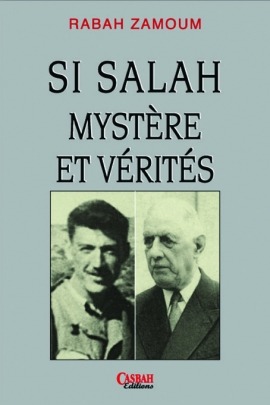
Si Salah, mystère et vérités – Rabah Zamoum
Membre de l'Organisation Secrète, Mohamed ZAMOUM dit Si Salah a participé au tirage de la proclamation du 1e Novembre, en son village Ighil Imoula.
Il effectue, pour le compte de la wilaya IV, une mission au Maroc et en Tunisie. Navré et écœuré, il revient à l'intérieur, refusant les postes de l’extérieur.
Devant l'abandon des maquis, Si Salah et ses deux adjoints rencontrent le président de Gaulle le 10 juin 1960 pour discuter du contenu de l'autodétermination. Le 20 juin 1960, le Gpra décide, alors, d'envoyer une délégation pour engager les négociations. Ayant accéléré le processus d'indépendance, Si Salah ne survivra pas au cessez-le-feu, tombé dans une embuscade le 21 juillet 1961 à M'chedellah (Maillot-Bouira).
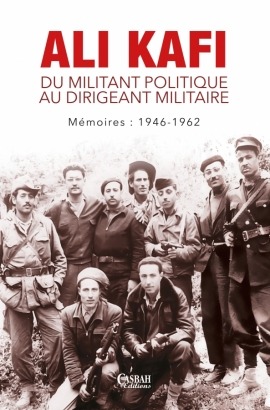
Ali Kafi – Du militant politique au dirigeant militaire -Mémoires : 1946-1962 – Ali Kafi
Ali Kafi est né le 17 octobre 1928 dans une ferme, à M’Souna, près d’El Harrouch (dans l’actuelle wilaya de Skikda).Après avoir appris le Coran auprès de son père, à M’Souna, Ali Kafi rejoint, en 1946, l’institut El Kettania de Constantine. Militant du Ppa, il anime une cellule de ce parti au sein de l’Institut. Son cycle d’étude terminé avec succès, il rejoint l’université de la Zitouna à Tunis, en 1950. Il y déploiera ses activités militantes au sein du milieu étudiant ainsi qu’en relation avec la résistance tunisienne, ce qui lui vaudra son expulsion de Tunisie en 1952.
De retour à Skikda, il doit purger une peine de six mois de prison consécutive à une condamnation pour activités nationalistes datant de 1950. À sa libération, il devient enseignant dans une école libre d’obédience Mtld, « El Moustakbal », à Skikda.
Il rejoint l’Aln au début de 1955. Il activera sous les ordres de Zighoud Youcef, successeur de Didouche à la tête de la wilaya II et il sera parmi les organisateurs de l’offensive du 20 Août 1955 dans le Nord Constantinois. Ali Kafi fera partie de la délégation de la wilaya II au Congrès de la Soummam, aux côtés de Zighoud, Bentobbal, Benaouda, Mezhoudi et Hocine Rouibah. Au printemps 1956, il est responsable militaire de la wilaya et, en avril 1956, devient colonel, commandant la wilaya II.
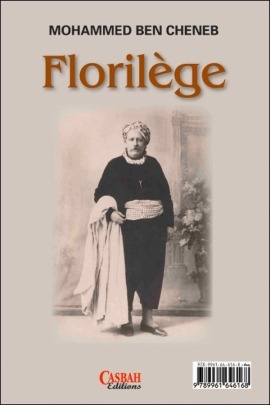
Florilège – Mohammed Ben Cheneb
Son œuvre scientifique s'échelonne sur une trentaine d'années. Abondante entre 1906 et 1913, elle marque un temps d'arrêt pendant la Première Guerre mondiale pour reprendre entre 1918 et 1928. Elle est des plus variées et traite de nombreuses disciplines : pédagogie, éducation, droit musulman, hadîth, poésie populaire, proverbes, lexicographie, grammaire, poésie classique, métrique, sociologie, histoire. Elle révèle la trace de la formation pédagogique qu'il reçut à l'école normale et rend, par ailleurs, l'écho des divers enseignements qu'il eut à dispenser dans les médersas, à la mosquée et à la Faculté des lettres.
L'essentiel de cette œuvre aura donc été, d'une part, l'édition de textes arabes, souvent accompagnés d'une traduction française et de notes et, d'autre part, des études en langue arabe, celles-ci étant l'exception. Le désir de faire connaître ou de sauver de l'oubli le patrimoine culturel de l'Algérie d'abord, de l'Occident musulman ensuite, a de toute évidence inspiré ses préférences et guidé son choix.
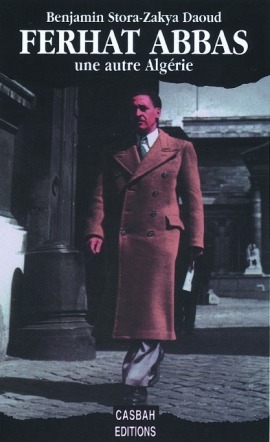
Ferhat Abbas, une autre Algérie – Benjamin Stora
Incarnant une « utopie algérienne », le pharmacien de Sétif a parcouru toutes les étapes qui, du Front populaire en 1936 aux accords d'Évian en 1962, ont conduit à l'indépendance de l'Algérie. Élu local avant la Seconde Guerre mondiale, il se fait connaître par des prises de position en faveur de l'assimilation.
Lorsque l'insurrection éclate, Ferhat Abbas tire la leçon de ses échecs, se radicalise et bascule en 1955 vers le FLN dont il rejoint les dirigeants rassemblés au Caire.
Ferhat Abbas devient le premier président du Gouvernement provisoire de la République algérienne puis, au lendemain de l'indépendance, président de l'Assemblée nationale. Ayant exprimé nettement son opposition au système du parti unique imposé par le FLN et son attachement au pluralisme, il est écarté dès 1963. Il meurt le 24 décembre 1985.
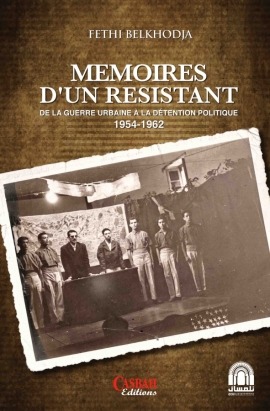
Mémoires d’un résistant – Fethi Belkhodja
Ce livre relate le parcours d’un homme qui s’est investi très tôt dans la lutte pour la reconquête de la souveraineté nationale et a acquitté pour cela le prix fort.
Les longues années d’incarcération dans les geôles et cachots du système repressif colonial, après les épisodes éprouvants de la vie de fidaï, l’ont mis en présence d’un grand nombre de vaillants patriotes qui ont partagé les mêmes épreuves et le même combat que lui en tant que détenus politiques et dont plusieurs sont tombés au champ d’honneur. C’est à ces martyrs de la liberté et de la dignité qu’il rend ici hommage, évoquant leur résistance et leur combat face à la machine infernale mise en place par l’occupant.
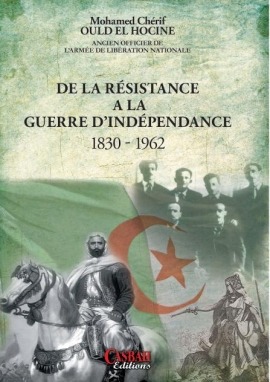
De la résistance à la guerre d’indépendance – Mohamed Chérif Ould Hocine
« Après avoir apporté dans un premier livre Au coeur du combat un témoignage poignant sur les actions de deux unités d’élite de l'Aln en wilaya IV, l'auteur à consacré un second ouvrage Éléments pour la mémoire - Afin que nul n'oublie à une galerie de portraits de très nombreux chouhada, moudjahidine et moudjahidate de toutes les wilayates historiques.
Dans ce troisième livre, M. Ould Hocine a tenu à élargir encore davantage la perspective de ses investigations et recensions. Remontant jusqu'à la première agression colonialiste française du 14 Juin 1830, l'auteur passe en revue l'ensemble des actes majeurs de résistance posés par les Algériens avant que la résistance ne cède le pas à la guerre pour la libération nationale. »
A Little History of the United States (Little Histories)
A fast-paced, character-filled history that brings the unique American saga to life for readers of all ages“This is a little history with a big heart, meant to be savored more than studied, read out loud like poetry, or perhaps sung like a hymn.”—Joseph J. Ellis, author of Founding Brothers“Davidson has written a work that should lead readers to reflect anew on America’s past and present. . . . We can all use not just a good refresher course on American history, but also some good historical thinking on how we might better realize freedom, equality, and E pluribus unum.“—Daily BeastHow did a land and people of such immense diversity come together under a banner of freedom and equality to form one of the most remarkable nations in the world? Everyone from young adults to grandparents will be fascinated by the answers uncovered in James West Davidson’s vividly told A Little History of the United States. In 300 fast-moving pages, Davidson guides his readers through 500 years, from the first contact between the two halves of the world to the rise of America as a superpower in an era of atomic perils and diminishing resources.In short, vivid chapters the book brings to life hundreds of individuals whose stories are part of the larger American story. Pilgrim William Bradford stumbles into an Indian deer trap on his first day in America: Harriet Tubman lets loose a pair of chickens to divert attention from escaping slaves: the toddler Andrew Carnegie, later an ambitious industrial magnate, gobbles his oatmeal with a spoon in each hand. Such stories are riveting in themselves, but they also spark larger questions to ponder about freedom, equality, and unity in the context of a nation that is, and always has been, remarkably divided and diverse.
A Little Book of Language (Little Histories)
Now in paperback, in the tradition of E. H. Gombrich's A Little History of the World, a lively journey through the story of languageWith a language disappearing every two weeks and neologisms springing up almost daily, an understanding of the origins and currency of language has never seemed more relevant. In this charming volume, a narrative history written explicitly for a young audience, expert linguist David Crystal proves why the story of language deserves retelling.From the first words of an infant to the peculiar modern dialect of text messaging, A Little Book of Language ranges widely, revealing language’s myriad intricacies and quirks. In animated fashion, Crystal sheds light on the development of unique linguistic styles, the origins of obscure accents, and the search for the first written word. He discusses the plight of endangered languages, as well as successful cases of linguistic revitalization. Much more than a history, Crystal’s work looks forward to the future of language, exploring the effect of technology on our day-to-day reading, writing, and speech. Through enlightening tables, diagrams, and quizzes, as well as Crystal’s avuncular and entertaining style, A Little Book of Language will reveal the story of language to be a captivating tale for all ages.
As I Lay Dying: A Norton Critical Edition (Norton Critical Editions)
“Michael Gorra approaches his second edition of As I Lay Dying with the scholarly care, attention, and intellectual suppleness typical of all his work. Not only does his introduction sparkle―navigating us with ease and fluency through the history and significance of a novel that precisely because of what Gorra rightly calls its formal “perfect[ion]” is often admired less than Faulkner’s other, more “monumental” and “difficult” texts. But Gorra’s choice of supplementary materials also reflects his commitment to presenting his readers with a full and unflinching view of Faulkner as an American writer with an increasingly contentious position within the very canon he helped to shape.” ―Pardis Dabashi, Bryn Mawr College“Place and time play a significant role in the literature of the American South, yet this Critical Edition of As I Lay Dying offers a way of engaging with the work of William Faulkner beyond the traditional boundaries of Southern literature. The accessible readings and criticism that are part of this book allow readers to recognize the ways As I Lay Dying―and all of Faulkner’s literary work―captured an idea of the American South while at the same time uncovering something universal and profound about the human condition.” ―W. Ralph Eubanks, University of MississippiThis Norton Critical Edition is based on the 1985 corrected text and is accompanied by newly updated and expanded explanatory annotations and an introduction by Michael Gorra.“Backgrounds and Contexts” is divided into three sections, each of which includes a concise introduction by Michael Gorra that carefully frames the issues presented, with particular attention to As I Lay Dying’s place in Faulkner’s literary life. “Contemporary Reception” includes a selection of seven reviews, including those by Julia K. W. Baker, Henry Nash Smith, and Valery Larbaud. “The Writer and His Work” examines Faulkner’s own claims regarding the composition of the novel and his changing opinions over time, sample pages from the manuscript, his Nobel Prize address, and additional writings by Faulkner on Yoknapatawpha County. “Cultural Context” reprints seven essays and advertisements―three selections new to the Second Edition―along with other materials that address questions of Southern motherhood, Agrarianism, and the Southern grotesque.“Criticism” begins with the editor’s introduction to As I Lay Dying’s critical history and scholarly reception. Eleven critical essays are included―five new to the Second Edition―by Olga W. Vickery, Cleanth Brooks, Eric Sundquist, Doreen Fowler, Dorothy J. Hale, Patrick O’Donnell, John T. Matthews, John Limon, Richard Godden, Susan Scott Parrish, and Erin E. Edwards.A chronology and a selected bibliography are also included.
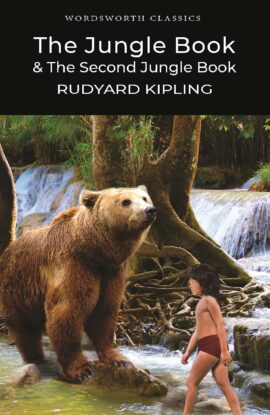
India The Beautiful
The Jungle Book introduces Mowgli, the human foundling adopted by a family of wolves. It tells of the enmity between him and the tiger Shere Khan, who killed Mowgli's parents, and of the friendship between the man-cub and Bagheera, the black panther, and Baloo, the sleepy brown bear, who instructs Mowgli in the Laws of the Jungle.The Second Jungle Book contains some of the most thrilling of the Mowgli stories. It includes Red Dog, in which Mowgli forms an unlikely alliance with the python Kaa, How Fear Came and Letting in the Jungle as well as The Spring Running, which brings Mowgli to manhood and the realisation that he must leave Bagheera, Baloo and his other friends for the world of man.
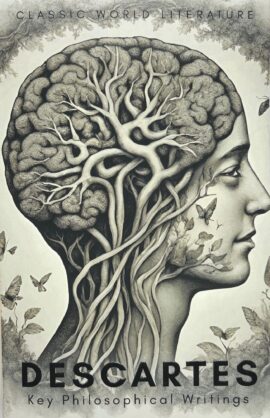
Key Philosophical Writings (Wordsworth Classics of World Literature)
Key Philosophical Writings by Rene Descartes. Rene Descartes (1569-1650), the 'father' of modern philosophy, is without doubt one of the greatest thinkers in history: his genius lies at the core of our contemporary intellectual identity. Breaking with the conventions of his own time and suffering persecution by the Church as a consequence, Descartes in his writings - most of which are philosophical classics - attempted to answer the central questions surrounding the self, God, free-will and knowledge, using the science of thought as opposed to received wisdom based on the tenets of faith. This edition, the most comprehensive one-volume selection of Descartes' works available in English, includes his great essay, Discourse on Method.
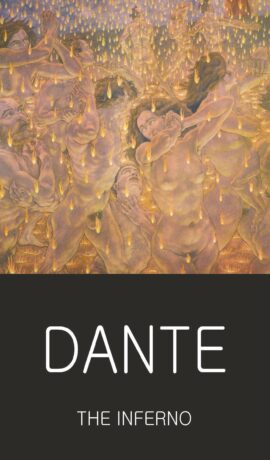
The Inferno (Classics of World Literature)
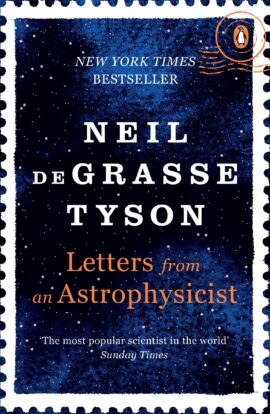
Letters from an Astrophysicist
INSTANT NEW YORK TIMES BESTSELLER!Join the galactic conversation on the biggest issues in the universe, from the 'most popular scientist in the world'‘Don't fear change. Don't fear failure. The only thing to fear is loss of ambition. But if you've got plenty of that, then you have nothing to fear at all’ – Neil deGrasse TysonNeil deGrasse Tyson is arguably the most influential, acclaimed scientist on the planet. As director of the Hayden Planetarium, and host of Cosmos and StarTalk, he has dedicated his life to exploring and explaining the mysteries of the universe.Every year, he receives thousands of letters – from students to prisoners, scientists to priests. Some seek advice, others yearn for inspiration: some are full of despair, others burst with wonder. But they are all searching for understanding, meaning and truth.His replies are by turns wise, funny, and mind-blowing. In this, his most personal book by far, he covers everything from God to the history of science, from aliens to death. He bares his soul – his passions, his doubts, his hopes. The big theme is everywhere in these pages: what is our place in the universe?The result is an awe-inspiring read and an intimate portal into an incredible mind, which reveals the power of the universe to start conversations and inspire curiosity in all of us.
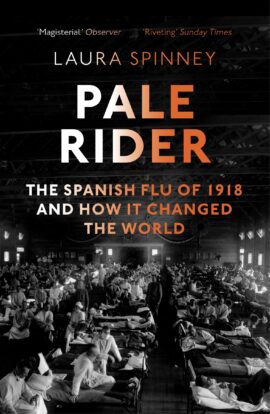
Pale Rider: The Spanish Flu of 1918 and How it Changed the World
With a death toll of between 50 and 100 million people and a global reach, the Spanish flu of 1918–1920 was the greatest human disaster, not only of the twentieth century, but possibly in all of recorded history. And yet, in our popular conception it exists largely as a footnote to World War I.In Pale Rider, Laura Spinney recounts the story of an overlooked pandemic, tracing it from Alaska to Brazil, from Persia to Spain, and from South Africa to Odessa. Telling the story from the point of view of those who lived through it, she shows how the pandemic was shaped by the interaction of a virus and the humans it encountered: and how this devastating natural experiment put both the ingenuity and the vulnerability of humans to the test.Drawing on the latest research in history, virology, epidemiology, psychology, and economics, Laura Spinney narrates a catastrophe that changed humanity for decades to come, and continues to make itself felt today. In the process she demonstrates that the Spanish flu was as significant – if not more so – as two world wars in shaping the modern world: in disrupting, and often permanently altering, global politics, race relations, family structures, and thinking across medicine, religion and the arts.
The Plot Against America
When the renowned aviation hero and rabid isolationist Charles A. Lindbergh defeated Franklin Roosevelt by a landslide in the 1940 presidential election, fear invaded every Jewish household in America. Lindbergh had publicly blamed the Jews for pushing America towards a pointless war with Nazi Germany. Then, upon taking office as the 33rd president of the United States, he also negotiated a cordial 'understanding' with Adolf Hitler. What followed in America is the historical setting for this startling new novel by Pulitzer-prize winner Philip Roth, who recounts what it was like for his Newark family during the menacing years of the Lindbergh presidency, when American citizens who happened to be Jews had every reason to expect the worst. Praise for "The Plot Against America": ""The Plot Against America" is an epic, built - painstakingly, passionately, near perfectly - of the small structures of the particular. A dark, humane masterpiece. Roth is at the peak of his powers" - "The Times". "The word genius doesn't seem excessive - utterly plausible. "The Plot Against America" creates its reality magisterially, in long, fluid sentences that carry you beyond scepticism" - "The Guardian". "Magnificent. Roth is writing the best books of his life. He captures better than anyone the collision of public and private, the intrusion of history into the skin, the pores of every individual alive" - "The Guardian".
Metaphysics as a Guide to Morals
The decline of religion and ever increasing influence of science pose acute ethical issues for us all. Can we reject the literal truth of the Gospels yet still retain a Christian morality? Can we defend any 'moral values' against the constant encroachments of technology? Indeed, are we in danger of losing most of the qualities which make us truly human? Here, drawing on a novelist's insight into art, literature and abnormal psychology, Iris Murdoch conducts an ongoing debate with major writers, thinkers and theologians—from Augustine to Wittgenstein, Shakespeare to Sartre, Plato to Derrida—to provide fresh and compelling answers to these crucial questions. From Publishers Weekly British novelist-philosopher Murdoch's treatise on contemporary morality spans such topics as Shakespearean tragedy, Martin Buber's philosophy and the nature of the imagination. Copyright 1994 Reed Business Information, Inc. From Library Journal This book is about the interplay of metaphysical images in art, religon, and especially morals. Morality is fundamental to human nature and is to be understood, according to distinguished novelist and philosophy professor Murdoch, not merely in piecemeal analysis but in the broad synthesis of metaphysical categories that set the order and pattern of our moral experience and our concepts thereof. Moral discernment comes from concentrated attention and appears ex nihilo , as by a kind of grace that leads us from contingent detail toward a perfection that we (allegedly) know intuitively. The work draws significant influence from Plato and Kant and also discusses aspects of Schopenhauer, Wittgenstein, and Buber in detail. Far-ranging and rich with well-chosen examples, this insightful book challenges us to think more clearly about its subject.- Robert Hoffman, York Coll., CUNYCopyright 1993 Reed Business Information, Inc. Review "Iris Murdoch has written a book which concerns all of us as human beings … There are pages here that one wants to embrace her for, pages that say things of fundamental human importance in a way that they have never quite been said before" —Noel Malcolm in the Sunday Telegraph"This is philosophy dragged from the cloister, dusted down and made freshly relevant to suffering and egoism, death and religious ecstasy … and how we feel compasison for others" —Terry Eagleton in the Guardian"Gripping … it enchants with a clause that sets you daydreaming, captivates with a stream of thought, empowers with reminiscences" —Ian Hacking in the London Review of Books"Anyone who has even the slightest interest in philosophical matters will find Metaphysics as a Guide to Morals an utterly absorbing book" —The Wall Street Journal"Remarkable … Iris Murdoch has once again put us all in her debt." —Alasdair MacIntyre in The New York Times Book Review About the Author Iris Murdoch (1919–1999) was born in Dublin and brought up in London. She studied philosophy at Cambridge and was a philosophy fellow at St. Anne's College for 20 years. She published her first novel in 1954 and was instantly recognized as a major talent. She went on to publish more than 26 novels, as well as works of philosophy, plays, and poetry.
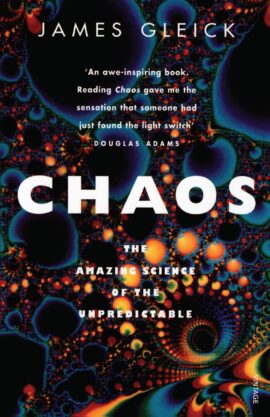
Chaos
Chaos, a book by James Gleick, first introduced the concept and early development of the chaos theory to the public. Chaos theory is a relatively new field in physics, and deals with simple and complex causes that react to one another. Chaos theory is considered as the third revolution in 20th-century science that uses traditional mathematical ways of understanding and explaining complex natural systems. It philosophically counters the second law of thermodynamics.Chaos helps us in understanding the fact that there is growth and pattern in chaos itself, despite the outward appearance of being random. Various concepts such as the butterfly effect, universal constants, and strange attractors are discussed at a length in the book. Numerous theories of Mitchell J Feigenbaum and D'arcy Thompson are discussed in an elaborate manner, while also taking into account their historical background. The book explains the Mandelbrot Set and Julia Set without resorting to complex mathematics. In this book, the importance of scientific education is stressed upon by the author.This book has been nominated for numerous book awards and widely acclaimed as one of the best books on chaos theory. This book was published in 1997 by RHUK, and is available in paperback.Key Features:This is one of the first books that was ever written on the chaos theory, and has also been nominated for various book prizes. It helps us in understanding the complexity of problems and the best means of solving it.