

Right Kind of Wrong: Why Learning to Fail Can Teach Us to Thrive
3.900,00 د.ج
We All Fail Sometimes. Now, A World-leading Harvard Professor Reveals How These Failures Can Lead Us To Happier, More Successful Lives – Provided We Know How To Learn From Them. We Used To Think Of Failure As A Problem, To Be Avoided At All Costs. Now, We’re Often Told That Failure Is Desirable – That We Must ‘fail Fast, Fail Often’. The Trouble Is, Neither Approach Distinguishes The Good Failures From The Bad. As A Result, We Miss The Opportunity To Fail Well. Here, Amy Edmondson – The World’s Most Influential Organisational Psychologist – Reveals How We Get Failure Wrong, And How To Get It Right. She Draws On A Lifetime’s Research Into The Science Of ‘psychological Safety’ To Show That The Most Successful Cultures Are Those In Which You Can Fail Openly, Without Your Mistakes Being Held Against You. She Introduces The Three Archetypes Of Failure – Simple, Complex And Intelligent – And Explains How To Harness The Revolutionary Potential Of The Good Ones (and Eliminate The Bad). And She Tells Vivid Stories Ranging From The History Of Open Heart Surgery To The Columbia Space Shuttle Disaster, All To Ask A Simple, Provocative Question: What If It Is Only By Learning To Fail That We Can Hope To Truly Succeed?

We All Fail Sometimes. Now, A World-leading Harvard Professor Reveals How These Failures Can Lead Us To Happier, More Successful Lives – Provided We Know How To Learn From Them. We Used To Think Of Failure As A Problem, To Be Avoided At All Costs. Now, We’re Often Told That Failure Is Desirable – That We Must ‘fail Fast, Fail Often’. The Trouble Is, Neither Approach Distinguishes The Good Failures From The Bad. As A Result, We Miss The Opportunity To Fail Well. Here, Amy Edmondson – The World’s Most Influential Organisational Psychologist – Reveals How We Get Failure Wrong, And How To Get It Right. She Draws On A Lifetime’s Research Into The Science Of ‘psychological Safety’ To Show That The Most Successful Cultures Are Those In Which You Can Fail Openly, Without Your Mistakes Being Held Against You. She Introduces The Three Archetypes Of Failure – Simple, Complex And Intelligent – And Explains How To Harness The Revolutionary Potential Of The Good Ones (and Eliminate The Bad). And She Tells Vivid Stories Ranging From The History Of Open Heart Surgery To The Columbia Space Shuttle Disaster, All To Ask A Simple, Provocative Question: What If It Is Only By Learning To Fail That We Can Hope To Truly Succeed?
Produits similaires

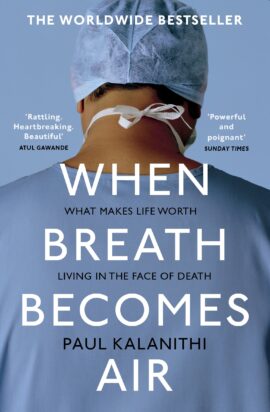
When Breath Becomes Air: THE MILLION COPY BESTSELLER
When Breath Becomes Air chronicles Kalanithi’s transformation from a medical student asking what makes a virtuous and meaningful life into a neurosurgeon working in the core of human identity – the brain – and finally into a patient and a new father.
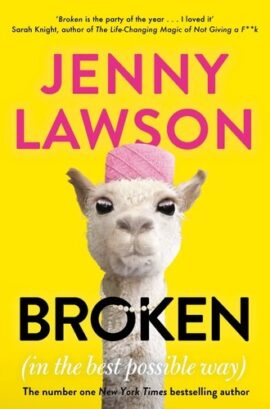
Broken: in the Best Possible Way
‘Broken is the party of the year . . . I loved it’ - Sarah Knight, bestselling author of The Life-Changing Magic of Not Giving a F**k
As her fans already know, Jenny Lawson suffers from depression. In Broken, Jenny humanizes what we all face in an all-too-real way, reassuring us that we’re not alone and making us laugh while doing it. Of course, Jenny’s long-suffering husband Victor, the Ricky to Jenny’s Lucille Ball, is along for the ride.
Hilarious, heart-warming and honest, Broken is about living, surviving, and thriving. A beacon of hope and a wellspring of laughter when we all need it most.
A New York Times, Washington Post and LA Times bestseller.
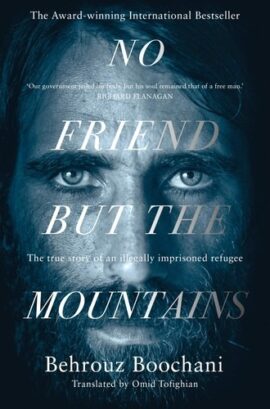
No Friend but the Mountains: The True Story of an Illegally Imprisoned Refugee
In 2013, Kurdish journalist Behrouz Boochani sought asylum in Australia but was instead illegally imprisoned in the country’s most notorious detention centre on Manus Island. He has been there ever since. This book is the result.
Behrouz Boochani spent nearly five years typing passages of this book one text at a time from a secret mobile phone in prison. Compiled and translated from Farsi, they form an incredible story of how escaping political persecution in Iran, he ended up trapped as a stateless person. This vivid, gripping portrait of his years of incarceration and exile shines devastating light on the fates of so many people as borders close around the world.
No Friend but the Mountains is both a brave act of witness and a moving testament to the humanity of all people, in the most extreme of circumstances.
'A brilliant book. No Friend but the Mountains can rightly take its place on the shelf of world prison literature . . . It is a profound victory for a young poet who showed us all how much words can still matter.' - Richard Flanagan, Booker Prize winning author of The Narrow Road to the Deep North
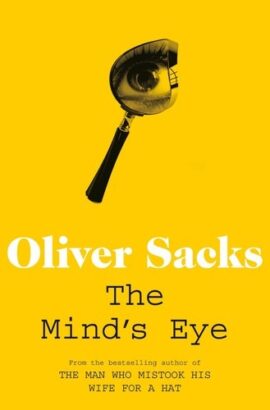
The Mind’s Eye
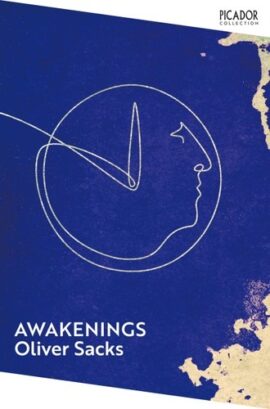
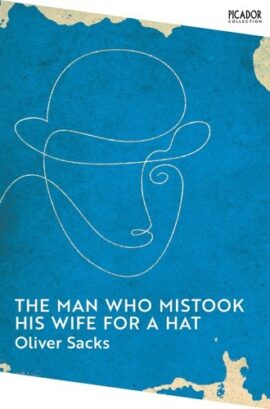
The Man Who Mistook His Wife for a Hat
If a man has lost a leg or an eye, he knows he has lost a leg or an eye; but if he has lost a self – himself – he cannot know it, because he is no longer there to know it.
In this extraordinary book, Dr. Oliver Sacks recounts the stories of patients struggling to adapt to often bizarre worlds of neurological disorder. Here are people who can no longer recognize everyday objects or those they love; who are stricken with violent tics or shout involuntary obscenities, and yet are gifted with unusually acute artistic or mathematical talents. If sometimes beyond our surface comprehension, these brilliant tales illuminate what it means to be human.
A provocative exploration of the mysteries of the human mind, The Man Who Mistook His Wife for a Hat is a million-copy bestseller by the twentieth century's greatest neurologist.
Part of the Picador Collection, a series showcasing the best of modern literature.