
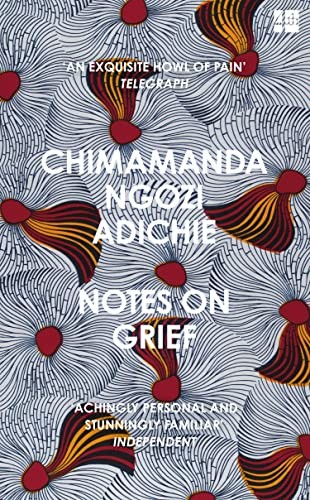

Notes on Grief
1.700,00 د.ج
Arran de la perdua del seu pare, Chimamanda Ngozi Adichie ha escrit un text lúcid i sincer que ha volgut compartir amb tots els seus lectors.áSobre el dol es un recull de reflexions al voltant de la perdua, l’absencia i el pas del temps.
10
Items sold in last 3 days
0
People watching this product now!
Estimated delivery dates: mai 13, 2026 – mai 20, 2026

Produits similaires


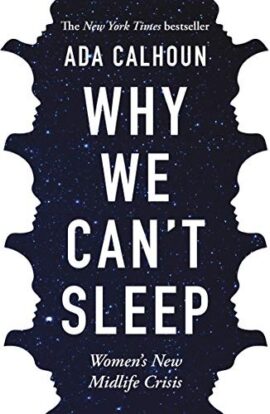
Why We Can’t Sleep: Women’s New Midlife Crisis
When Ada Calhoun found herself in the throes of a midlife crisis, she thought that she had no right to complain. She was married with children and a good career. So why did she feel miserable? And why did it seem that other Generation X women were miserable, too?
Calhoun decided to find some answers. She looked into housing costs, HR trends, credit card debt averages and divorce data. At every turn, she saw a pattern: sandwiched between the Boomers and the Millennials, Gen X women were facing new problems as they entered middle age, problems that were being largely overlooked.
Speaking with women across America about their experiences as the generation raised to 'have it all,' Calhoun found that most were exhausted, terrified about money, under-employed, and overwhelmed. Instead of their issues being heard, they were told instead to lean in, take 'me-time' or make a chore chart to get their lives and homes in order.
In Why We Can't Sleep, Calhoun opens up the cultural and political contexts of Gen X's predicament and offers solutions for how to pull oneself out of the abyss - and keep the next generation of women from falling in. The result is reassuring, empowering and essential reading for all middle-aged women, and anyone who hopes to understand them.
Calhoun decided to find some answers. She looked into housing costs, HR trends, credit card debt averages and divorce data. At every turn, she saw a pattern: sandwiched between the Boomers and the Millennials, Gen X women were facing new problems as they entered middle age, problems that were being largely overlooked.
Speaking with women across America about their experiences as the generation raised to 'have it all,' Calhoun found that most were exhausted, terrified about money, under-employed, and overwhelmed. Instead of their issues being heard, they were told instead to lean in, take 'me-time' or make a chore chart to get their lives and homes in order.
In Why We Can't Sleep, Calhoun opens up the cultural and political contexts of Gen X's predicament and offers solutions for how to pull oneself out of the abyss - and keep the next generation of women from falling in. The result is reassuring, empowering and essential reading for all middle-aged women, and anyone who hopes to understand them.

When Breath Becomes Air: THE MILLION COPY BESTSELLER
At the age of thirty-six, on the verge of completing a decade’s training as a neurosurgeon, Paul Kalanithi was diagnosed with inoperable lung cancer. One day he was a doctor treating the dying, the next he was a patient struggling to live.
When Breath Becomes Air chronicles Kalanithi’s transformation from a medical student asking what makes a virtuous and meaningful life into a neurosurgeon working in the core of human identity – the brain – and finally into a patient and a new father.
When Breath Becomes Air chronicles Kalanithi’s transformation from a medical student asking what makes a virtuous and meaningful life into a neurosurgeon working in the core of human identity – the brain – and finally into a patient and a new father.
An Anthropologist on Mars
'An inexhaustible tourist at the farther reaches of the mind, Sacks presents, in sparse, unsentimental prose, the stories of seven of his patients. The result is as rich, vivid and compelling as any collection of short fictional stories' Independent on Sunday As with his previous bestseller, The Man Who Mistook His Wife for a Hat, Oliver Sacks uses case studies to illustrate the myriad ways in which neurological conditions can affect our sense of self, our experience of the world, and how we relate to those around us. Writing with his trademark blend of scientific rigour and human compassion, he describes patients such as the colour-blind painter or the surgeon with compulsive tics that disappear in the operating theatre; patients for whom disorientation and alienation but also adaptation are inescapable facts of life. 'Sacks' great gift is his capacity to place himself in the position of his subjects, to see the world the way they see it and to empathize with their condition with grea

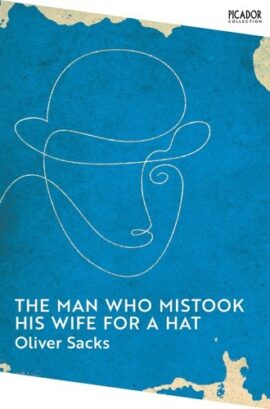
The Man Who Mistook His Wife for a Hat
Celebrating Fifty Years of Picador Books
If a man has lost a leg or an eye, he knows he has lost a leg or an eye; but if he has lost a self – himself – he cannot know it, because he is no longer there to know it.
In this extraordinary book, Dr. Oliver Sacks recounts the stories of patients struggling to adapt to often bizarre worlds of neurological disorder. Here are people who can no longer recognize everyday objects or those they love; who are stricken with violent tics or shout involuntary obscenities, and yet are gifted with unusually acute artistic or mathematical talents. If sometimes beyond our surface comprehension, these brilliant tales illuminate what it means to be human.
A provocative exploration of the mysteries of the human mind, The Man Who Mistook His Wife for a Hat is a million-copy bestseller by the twentieth century's greatest neurologist.
Part of the Picador Collection, a series showcasing the best of modern literature.
If a man has lost a leg or an eye, he knows he has lost a leg or an eye; but if he has lost a self – himself – he cannot know it, because he is no longer there to know it.
In this extraordinary book, Dr. Oliver Sacks recounts the stories of patients struggling to adapt to often bizarre worlds of neurological disorder. Here are people who can no longer recognize everyday objects or those they love; who are stricken with violent tics or shout involuntary obscenities, and yet are gifted with unusually acute artistic or mathematical talents. If sometimes beyond our surface comprehension, these brilliant tales illuminate what it means to be human.
A provocative exploration of the mysteries of the human mind, The Man Who Mistook His Wife for a Hat is a million-copy bestseller by the twentieth century's greatest neurologist.
Part of the Picador Collection, a series showcasing the best of modern literature.
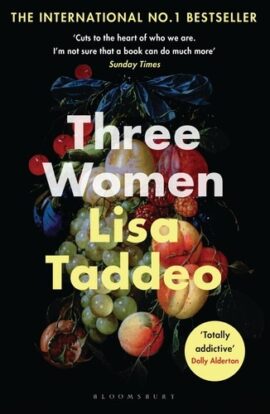
Three Women: A BBC 2 Between the Covers Book Club Pick
All Lina wanted was to be desired. How did she end up in a marriage with two children and a husband who wouldn't touch her?
All Maggie wanted was to be understood. How did she end up in a relationship with her teacher and then in court, a hated pariah in her small town?
All Sloane wanted was to be admired. How did she end up a sexual object of men, including her husband, who liked to watch her have sex with other men and women?
Three Women is a record of unmet needs, unspoken thoughts, disappointments, hopes and unrelenting obsessions.
All Maggie wanted was to be understood. How did she end up in a relationship with her teacher and then in court, a hated pariah in her small town?
All Sloane wanted was to be admired. How did she end up a sexual object of men, including her husband, who liked to watch her have sex with other men and women?
Three Women is a record of unmet needs, unspoken thoughts, disappointments, hopes and unrelenting obsessions.