
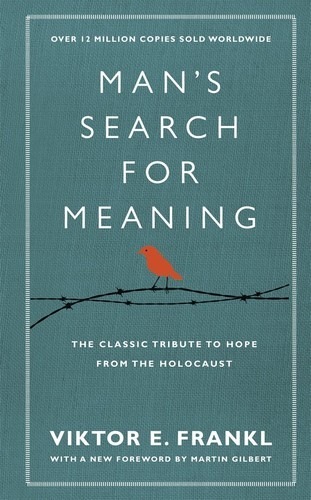
Man’s Search for Meaning
3.400,00 د.ج
Used – Very Good as NEW, Exactly same ISBN as listed, Please double check ISBN carefully before ordering.
2
Items sold in last 3 days
0
People watching this product now!
Estimated delivery dates: mai 31, 2026 – juin 7, 2026

Produits similaires
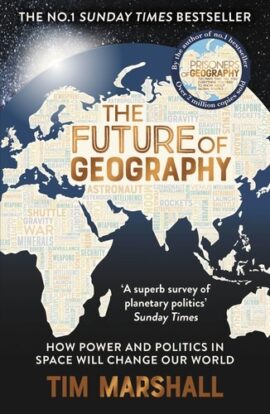
The Future of Geography
Spy satellites orbiting the Moon. Space metals worth billions. Humans on Mars within our lifetimes. This isn’t science fiction. It’s astropolitics. We’re entering a new space race – and it could revolutionise life on Earth.
the new frontier, a wild and lawless place. It is already central to communication, economics, military strategy and international relations on Earth. Now, it is the latest arena for human exploration, exploitation – and, possibly, conquest. We’re heading up and out, and we’re taking our power struggles with us. China, the USA and Russia are leading the way.
From physical territory and resources to satellites, weaponry and strategic choke points, geopolitics is as important in the skies above us as it is down below. If you’ve ever wondered if humans are going back to the Moon, who will benefit from exploration or what space wars might look like, the answers are here.
With all the insight and wit that have made Tim Marshall the UK’s most popular writer on geopolitics, this gripping book shows how we got here and where we’re going, covering great-power rivalry; technology; commerce; combat in space; and what it means for all of us down here on Earth. This is essential reading on power, politics and the future of humanity.
the new frontier, a wild and lawless place. It is already central to communication, economics, military strategy and international relations on Earth. Now, it is the latest arena for human exploration, exploitation – and, possibly, conquest. We’re heading up and out, and we’re taking our power struggles with us. China, the USA and Russia are leading the way.
From physical territory and resources to satellites, weaponry and strategic choke points, geopolitics is as important in the skies above us as it is down below. If you’ve ever wondered if humans are going back to the Moon, who will benefit from exploration or what space wars might look like, the answers are here.
With all the insight and wit that have made Tim Marshall the UK’s most popular writer on geopolitics, this gripping book shows how we got here and where we’re going, covering great-power rivalry; technology; commerce; combat in space; and what it means for all of us down here on Earth. This is essential reading on power, politics and the future of humanity.

The Uninhabitable Earth: A Story of the Future
**SUNDAY TIMES AND THE NEW YORK TIMES BESTSELLER**
'An epoch-defining book' Matt Haig
'If you read just one work of non-fiction this year, it should probably be this' David Sexton, Evening Standard
It is worse, much worse, than you think.
The slowness of climate change is a fairy tale, perhaps as pernicious as the one that says it isn't happening at all, and if your anxiety about it is dominated by fears of sea-level rise, you are barely scratching the surface of what terrors are possible, even within the lifetime of a teenager today.
Over the past decades, the term "Anthropocene" has climbed into the popular imagination - a name given to the geologic era we live in now, one defined by human intervention in the life of the planet. But however sanguine you might be about the proposition that we have ravaged the natural world, which we surely have, it is another thing entirely to consider the possibility that we have only provoked it, engineering first in ignorance and then in denial a climate system that will now go to war with us for many centuries, perhaps until it destroys us. In the meantime, it will remake us, transforming every aspect of the way we live-the planet no longer nurturing a dream of abundance, but a living nightmare.
'An epoch-defining book' Matt Haig
'If you read just one work of non-fiction this year, it should probably be this' David Sexton, Evening Standard
It is worse, much worse, than you think.
The slowness of climate change is a fairy tale, perhaps as pernicious as the one that says it isn't happening at all, and if your anxiety about it is dominated by fears of sea-level rise, you are barely scratching the surface of what terrors are possible, even within the lifetime of a teenager today.
Over the past decades, the term "Anthropocene" has climbed into the popular imagination - a name given to the geologic era we live in now, one defined by human intervention in the life of the planet. But however sanguine you might be about the proposition that we have ravaged the natural world, which we surely have, it is another thing entirely to consider the possibility that we have only provoked it, engineering first in ignorance and then in denial a climate system that will now go to war with us for many centuries, perhaps until it destroys us. In the meantime, it will remake us, transforming every aspect of the way we live-the planet no longer nurturing a dream of abundance, but a living nightmare.
An Anthropologist on Mars
'An inexhaustible tourist at the farther reaches of the mind, Sacks presents, in sparse, unsentimental prose, the stories of seven of his patients. The result is as rich, vivid and compelling as any collection of short fictional stories' Independent on Sunday As with his previous bestseller, The Man Who Mistook His Wife for a Hat, Oliver Sacks uses case studies to illustrate the myriad ways in which neurological conditions can affect our sense of self, our experience of the world, and how we relate to those around us. Writing with his trademark blend of scientific rigour and human compassion, he describes patients such as the colour-blind painter or the surgeon with compulsive tics that disappear in the operating theatre; patients for whom disorientation and alienation but also adaptation are inescapable facts of life. 'Sacks' great gift is his capacity to place himself in the position of his subjects, to see the world the way they see it and to empathize with their condition with grea
Musicophilia: Tales of Music and the Brain
'A humane discourse on the fragility of our minds, of the bodies that give rise to them, and of the world they create for us. This book is filled with wonders' Daily Telegraph Oliver Sacks' compassionate tales of people struggling to adapt to different neurological conditions have fundamentally changed the way we think of our own minds. In Musicophilia, he examines the powers of music through the individual experiences of patients, musicians and everyday people those struck by affliction, unusual talent and even, in one case, by lightning to show not only that music occupies more areas of our brain than language does, but also that it can torment, calm, organize and heal. Always wise and compellingly readable, these stories alter our conception of who we are and how we function, and show us an essential part of what it is to be human. 'Fascinating. Music, as Sacks explains, "can pierce the heart directly". And this is the truth that he so brilliantly focuses upon that music saves, consoles and nourishes us' Daily Mail 'Irresistible, astonishing and moving' Spectator 'Deeply warm and sympathetic' Guardian
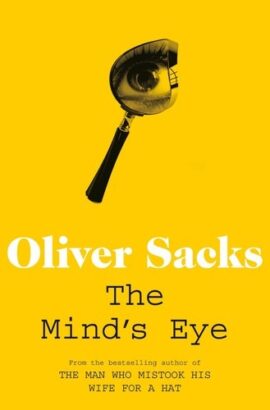
The Mind’s Eye
'Oliver Sacks is a perfect antidote to the anaesthetic of familiarity. His writing turns brains and minds transparent' Observer How does the brain perceive and interpret information from the eye? And what happens when the process is disrupted? In The Mind's Eye, Oliver Sacks tells the stories of people who are able to navigate the world and communicate with others despite losing what many of us consider indispensable senses and abilities: the capacity to recognize faces, the sense of three-dimensional space, the ability to read, the sense of sight. For all of these people, the challenge is to adapt to a radically new way of being in the world and The Mind's Eye is testament to the myriad ways that we, as humans, are capable of rising to this challenge. 'The Mind's Eye is about the possibility of recovery and the inexorable decline of the ageing individual. From this collision of incompatible truths, tragedy is made ...making this Sacks's most powerful book to date' Sunday Telegraph 'Packed with wisdom, humour, extraordinary human stories and reflections on how we all perceive the world ...He ends with a brilliant discussion of blindness and the ways in which blind people develop visual concepts. Heartily recommended' Reader's Digest