


Cinder
2.691,00 د.ج
Cinder, a gifted mechanic in New Beijing, is also a cyborg. Shes reviled by her stepmother and blamed for her stepsisters sudden illness. But when her life becomes entwined with the handsome Prince Kais, she finds herself at the centre of a violent struggle between the desires of an evil queen – and a dangerous temptation.open online women love to cheat
4
Items sold in last 3 days
0
People watching this product now!
Estimated delivery dates: juin 9, 2026 – juin 16, 2026

Description
Cinder, a gifted mechanic in New Beijing, is also a cyborg. Shes reviled by her stepmother and blamed for her stepsisters sudden illness. But when her life becomes entwined with the handsome Prince Kais, she finds herself at the centre of a violent struggle between the desires of an evil queen – and a dangerous temptation.open online women love to cheat
Produits similaires

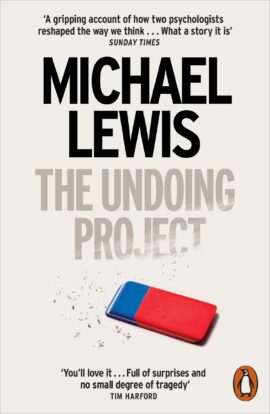
THE UNDOING PROJECT : A FRIENDSHIP THAT CHANGED THE WORLD
Bestselling author Michael Lewis examines how a Nobel Prize–winning theory of the mind altered our perception of reality.Forty years ago, Israeli psychologists Daniel Kahneman and Amos Tversky wrote a series of breathtakingly original studies undoing our assumptions about the decision-making process. Their papers showed the ways in which the human mind erred, systematically, when forced to make judgments about uncertain situations. Their work created the field of behavioral economics, revolutionized Big Data studies, advanced evidence-based medicine, led to a new approach to government regulation, and made much of Michael Lewis’s own work possible. Kahneman and Tversky are more responsible than anybody for the powerful trend to mistrust human intuition and defer to algorithms.The Undoing Project is about the fascinating collaboration between two men who have the dimensions of great literary figures. They became heroes in the university and on the battlefield―both had important careers in the Israeli military―and their research was deeply linked to their extraordinary life experiences. In the process they may well have changed, for good, mankind’s view of its own mind.
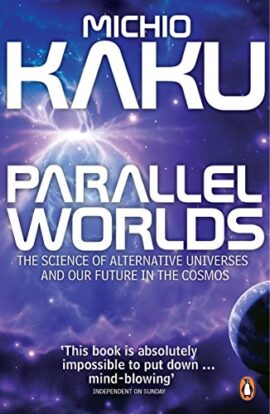
Parallel Worlds: The Science of Alternative Universes and Our Future in the Cosmos
As Michio Kaku reveals, what for 250 years was science-fiction fantasy is now the likeliest picture of reality... the journey he takes the reader on is so pituresque and the conclusions so startling that you are gripped - Sunday TimesThe world is coming to an end. But humankind's story is only just beginning...Imagine a future where we are not alone. Where our universe is just one of countless parallel worlds - some strangely familiar, some almost unimaginable. And that, when planet earth finally runs down to a cold, dark wasteland, we will be able to escape into these new worlds and start again. Kaku's thrilling guide to the galaxy shows us how it could happen sooner than we think - and the future for intelligent life is one of endless possibilities.Kaku brings his formidable explanatory talents to bear on one of the strangest and most exciting possibilities to have emerged from modern physics... wonderful - Brian GreeneOne of the gurus of modern physics - Financial TimesNobody who reads this book cane be anything less than amazed - Scotland on SundayAn exhilarating romp through the frontiers of cosmology - Martin ReesCover image: Joe Tucciarone / Science Photo Library
THE UNDOING PROJECT : A FRIENDSHIP THAT CHANGED THE WORLD
Bestselling author Michael Lewis examines how a Nobel Prize–winning theory of the mind altered our perception of reality.Forty years ago, Israeli psychologists Daniel Kahneman and Amos Tversky wrote a series of breathtakingly original studies undoing our assumptions about the decision-making process. Their papers showed the ways in which the human mind erred, systematically, when forced to make judgments about uncertain situations. Their work created the field of behavioral economics, revolutionized Big Data studies, advanced evidence-based medicine, led to a new approach to government regulation, and made much of Michael Lewis’s own work possible. Kahneman and Tversky are more responsible than anybody for the powerful trend to mistrust human intuition and defer to algorithms.The Undoing Project is about the fascinating collaboration between two men who have the dimensions of great literary figures. They became heroes in the university and on the battlefield―both had important careers in the Israeli military―and their research was deeply linked to their extraordinary life experiences. In the process they may well have changed, for good, mankind’s view of its own mind.
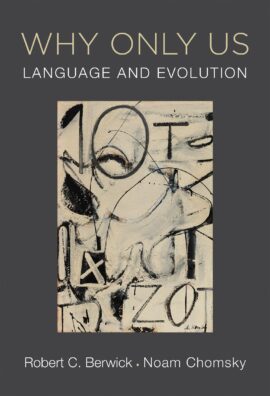
Why Only Us: Language and Evolution (The MIT Press)
Berwick and Chomsky draw on recent developments in linguistic theory to offer an evolutionary account of language and humans' remarkable, species-specific ability to acquire it.“A loosely connected collection of four essays that will fascinate anyone interested in the extraordinary phenomenon of language.”—New York Review of BooksWe are born crying, but those cries signal the first stirring of language. Within a year or so, infants master the sound system of their language: a few years after that, they are engaging in conversations. This remarkable, species-specific ability to acquire any human language—“the language faculty”—raises important biological questions about language, including how it has evolved. This book by two distinguished scholars—a computer scientist and a linguist—addresses the enduring question of the evolution of language.Robert Berwick and Noam Chomsky explain that until recently the evolutionary question could not be properly posed, because we did not have a clear idea of how to define “language” and therefore what it was that had evolved. But since the Minimalist Program, developed by Chomsky and others, we know the key ingredients of language and can put together an account of the evolution of human language and what distinguishes us from all other animals.Berwick and Chomsky discuss the biolinguistic perspective on language, which views language as a particular object of the biological world: the computational efficiency of language as a system of thought and understanding: the tension between Darwin's idea of gradual change and our contemporary understanding about evolutionary change and language: and evidence from nonhuman animals, in particular vocal learning in songbirds.
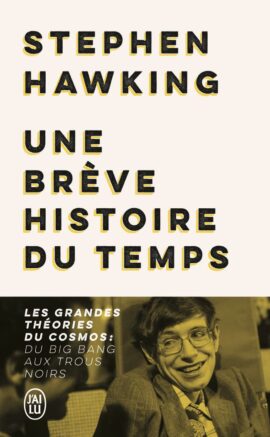
Une brève histoire du temps: Les grandes théories du cosmos : du Big Bang aux trous noirs
Voici le premier livre que Stephen Hawking a écrit pour le grand public. Il y expose, dans un langage accessible à tous, les plus récentes découvertes des astrophysiciens. Retraçant les grandes théories du cosmos depuis Galilée jusqu'à Einstein, racontant les ultimes découvertes en cosmologie, expliquant la nature des trous noirs, il propose ensuite de relever le plus grand défi de la science moderne : la recherche d'une théorie permettant de concilier la relativité générale et la mécanique quantique.Stephen Hawking a lutté pendant plus de quarante ans contre une très grave maladie neurodégénérative. Malgré ce handicap, il a consacré sa vie à tenter de percer les secrets de l'Univers et à nous faire partager ses découvertes. Un livre fascinant devenu un best-seller mondial.

Discours sur l’origine de l’univers
D'où vient l'univers ? Et d'où vient qu'il y a un univers ? Irrépressiblement, ces questions se posent à nous. Et dès qu'un discours prétend nous éclairer, nous tendons l'oreille, avides d'entendre l'écho du tout premier signal : les accélérateurs de particules vont bientôt nous révéler l'origine de l'univers en produisant des "big bang sousterre" : les données recueillies par le satellite Planck nous dévoiler le "visage de Dieu" : certains disent même qu'en vertu de la loi de la gravitation l'univers a pu se créer de lui-même, à partir de rien... Le grand dévoilement ne serait donc devenu qu'une affaire d'ultimes petits pas ? Rien n'est moins sûr... Car de quoi parle la physique quand elle parle d'"origine" ? Qu'est-ce que les théories actuelles sont réellement en mesure de nous révéler ? À bien les examiner, les perspectives que nous offre la cosmologie contemporaine sont plus vertigineuses encore que tout ce que nous avons imaginé : l'univers a-t-il jamais commencé ?From the Back CoverD'où vient l'univers? Et d'où vient qu'il y a un univers? Irrépressiblement, ces questions se posent à nous. Et dès qu'un discours prétend nous éclairer, nous tendons l'oreille, avides d'entendre l'écho du tout premier signal : les accélérateurs de particules vont bientôt nous révéler l'origine de l'univers en produisant des «big bang sousterre» : les données recueillies par le satellite Planck nous dévoiler le «visage de Dieu» : certains disent même qu'en vertu de la loi de la gravitation l'univers a pu se créer de lui-même, à partir de rien... Le grand dévoilement ne serait donc devenu qu'une affaire d'ultimes petits pas? Rien n'est moins sûr... Car de quoi parle la physique quand elle parle d'«origine»? Qu'est-ce que les théories actuelles sont réellement en mesure de nous révéler? À bien les examiner, les perspectives que nous offre la cosmologie contemporaine sont plus vertigineuses encore que tout ce que nous avons imaginé : l'univers a-t-il jamais commencé?About the AuthorÉtienne Klein est un physicien et philosophe des sciences, Professeur à l'École centrale, docteur en philosophie des sciences, il a créé et dirigé le Laboratoire de recherche sur les sciences de la matière au Commissariat à l'énergie atomique (CEA). En parallèle, il mène une carrière dans le domaine de la vulgarisation notamment autour de la physique quantique et la physique des particules.
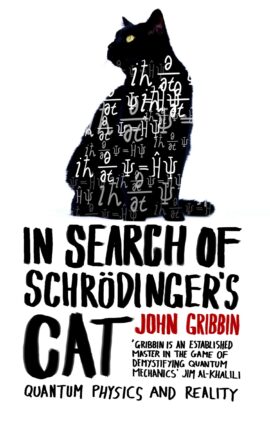
In Search Of Schrodinger’s Cat
Quantum theory is so shocking that Einstein could not bring himself to accept it. It is so important that it provides the fundamental underpinning of all modern sciences. Without it, we'd have no nuclear power or nuclear weapons, no TV, no computers, no science of molecular biology, no understanding of DNA, no genetic engineering. In Search of Schrodinger's Cat tells the complete story of quantum mechanics, a truth stranger than any fiction. John Gribbin takes us step by step into an ever more bizarre and fascinating place, requiring only that we approach it with an open mind. He introduces the scientists who developed quantum theory. He investigates the atom, radiation, time travel, the birth of the universe, superconductors and life itself. And in a world full of its own delights, mysteries and surprises, he searches for Schrodinger's Cat - a search for quantum reality - as he brings every reader to a clear understanding of the most important area of scientific study today - quantum physics. In Search of Schrodinger's Cat is a fascinating and delightful introduction to the strange world of the quantum - an essential element in understanding today's world.