
Affichage de 751–775 sur 1220 résultatsTrié par popularité
Filter par maison d’édition :









The Modern Classics Myth of Sisyphus (Penguin Modern Classics)
The summation of the existentialist philosophy threaded throughout all his writing, Albert Camus' The Myth of Sisyphus is translated by Justin O'Brien with an introduction by James Wood in Penguin Classics. In this profound and moving philosophical statement, Camus poses the fundamental question: is life worth living? If human existence holds no significance, what can keep us from suicide? As Camus argues, if there is no God to give meaning to our lives, humans must take on that purpose themselves. This is our 'absurd' task, like Sisyphus forever rolling his rock up a hill, as the inevitability of death constantly overshadows us. Written during the bleakest days of the Second World War, The Myth of Sisyphus (Le Mythe de Sisyphe) argues for an acceptance of reality that encompasses revolt, passion and, above all, liberty. This volume contains several other essays, including lyrical evocations of the sunlit cities of Algiers and Oran, the settings of his great novels The Outsider and The Plague. Albert Camus (1913-60) is the author of a number of best-selling and highly influential works, all of which are published by Penguin. They include The Fall, The Outsider and The First Man. Awarded the Nobel Prize for Literature in 1957, Camus is remembered as one of the few writers to have shaped the intellectual climate of post-war France, but beyond that, his fame has been international. If you enjoyed The Myth of Sisyphus, you might like Camus' The Outsider, also available in Penguin Modern Classics. 'Camus could never cease to be one of the principal forces in our domain, nor to represent, in his own way, the history of France and of this century' Jean-Paul Sartre
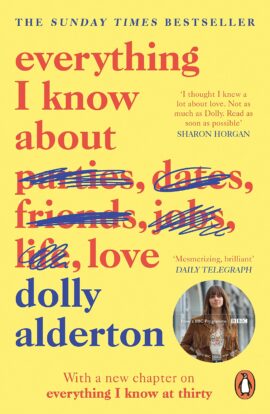
Everything I Know About Love
THE SUNDAY TIMES BESTSELLER WITH A NEW CHAPTER ON TURNING THIRTY*Winner of Autobiography of the Year at the National Book Awards 2018**Shortlisted for the Waterstones Book of the Year 2018*Award-winning journalist Dolly Alderton survived her twenties (just about) and in Everything I Know About Love, she gives an unflinching account of the bad dates and squalid flat-shares, the heartaches and humiliations, and most importantly, the unbreakable female friendships that helped her to hold it all together. Glittering with wit, heart and humour, this is a book to press into the hands of every woman who has ever been there or is about to find themselves taking that first step towards the rest of their lives.***************'Alderton is Nora Ephron for the millennial generation' Elizabeth Day'Steeped in furiously funny accounts of one-night stands, ill-advised late-night taxi journeys up the M1, grubby flat-shares and the beauty of female friendships, as Alderton joyfully booze-cruises her way through her twenties' Metro'Deeply funny, sometimes shocking, and admirably open-hearted and optimistic' Daily Telegraph'The book we will thrust into our friends' hands . . . that will help heal a broken heart. Alderton's wise words can resonate with women of all ages. She feels like a best friend and your older sister all rolled into one and her pages wrap around you like a warm hug' Evening Standard'A sensitive, astute and funny account of growing up millennial' Observer'I loved its truth, self awareness, humour and most of all, its heart-spilling generosity' Sophie Dahl 'Alderton proves a razor-sharp observer of the shifting dynamics of long term female friendship' Mail on Sunday'It's so full of life and laughs - I gobbled up this book. Alderton has built something beautiful and true out of many fragments of daftness' Amy Liptrot
The Consolations of Philosophy
The Fall
Jean-Baptiste Clamence is a soul in turmoil. Over several drunken nights he regales a chance acquaintance with his story. From this successful former lawyer and seemingly model citizen a compelling, self-loathing catalogue of guilt, hypocrisy and alienation pours forth. "The Fall" (1956) is a brilliant portrayal of a man who has glimpsed the hollowness of his existence. But beyond depicting one man's disillusionment, Camus's novel exposes the universal human condition and its absurdities - and our innocence that, once lost, can never be recaptured.
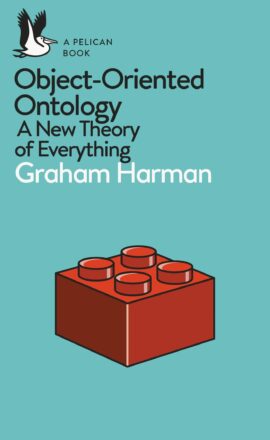
Object-Oriented Ontology: A New Theory of Everything (Pelican Books)
We humans tend to believe that things are only real in as much as we perceive them, an idea reinforced by modern philosophy, which privileges us as special, radically different in kind from all other objects. But as Graham Harman, one of the theory's leading exponents, shows, Object-Oriented Ontology (OOO) rejects the idea of human specialness: the world, he states, is clearly not the world as manifest to humans. "To think a reality beyond our thinking is not nonsense, but obligatory." At OOO's heart is the idea that objects—whether real, fictional, natural, artificial, human, or non-human—are mutually autonomous. This core idea has significance for nearly every field of inquiry which is concerned in some way with the systematic interaction of objects, and the degree to which individual objects resist full participation in such systems. In this brilliant new introduction, Graham Harman lays out OOO's history, ideas, and impact, taking in art and literature, politics and natural science along the way. From Sherlock Holmes, unicorns, and videogames to Dadaism, Voltaire, and string theory, this book will change the way you understand everything.
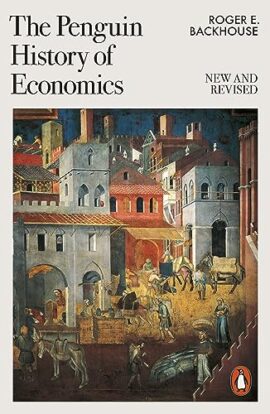
The Penguin History of Economics
The definitive guide to the history of economic thought, fully revised twenty years after first publicationRoger Backhouse's definitive guide takes the story of economic thinking from the ancient world to the present day, with a brand-new chapter on the twenty-first century and updates throughout to reflect the latest scholarship.Covering topics including globalisation, inequality, financial crises and the environment, Backhouse brings his breadth of expertise and a contemporary lens to this original and insightful exploration of economics, revealing how we got to where we are today.

A Pelican Book: Islam: The Essentials
The essential introduction to Islam by a leading expert Hardly a day goes by without mention of Islam. And yet, for most people, and in much of the world, Islam remains a little-known religion. Whether the issue is violence, terrorism, women's rights or slavery, Muslims are today expected to provide answers and to justify what Islam is - or is not. But little opportunity exists, either in the media or in society as a whole, to describe Islam: precisely the question this short and extremely accessible book sets out to answer. In simple, direct language it will introduce readers to Islam, to its spirituality, its principles, its rituals, its diversity and its evolution.
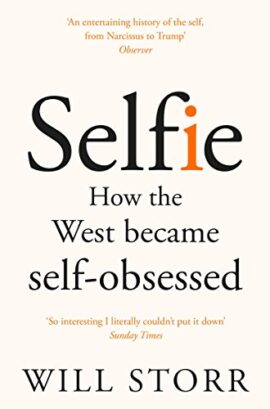
Selfie: How the West Became Self-Obsessed
‘Fascinating’ Guardian‘Brilliant’ Evening Standard‘Electrifying’ Financial Times‘So interesting I literally couldn’t put it down’ Sunday TimesWe live in the age of the individual. We are supposed to be slim, prosperous, happy, extroverted and popular. This is our culture’s image of the perfect self. We see this person everywhere: in advertising, in the press, all over social media. We’re told that to be this person you just have to follow your dreams, that our potential is limitless, that we are the source of our own success.But this model of the perfect self can be extremely dangerous. People are suffering under the torture of this impossible fantasy. Unprecedented social pressure is leading to increases in depression and suicide. Where does this ideal come from? Why is it so powerful? Is there any way to break its spell?To answer these questions, Selfie by Will Storr takes us from the shores of Ancient Greece, through the Christian Middle Ages, to the self-esteem evangelists of 1980s California, the rise of narcissism and the selfie generation, and right up to the era of hyper-individualistic neoliberalism in which we live now.It tells the extraordinary story of the person we all know so intimately – our self.As featured on Russell Brand's Under The Skin podcast.
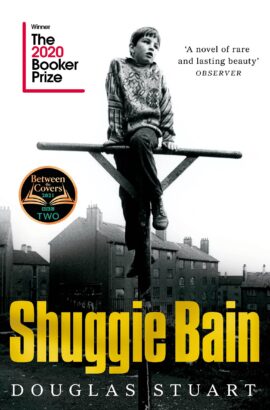
Shuggie Bain
Shuggie Bain is the unforgettable story of young Hugh "Shuggie" Bain, a sweet and lonely boy who spends his 1980s childhood in run-down public housing in Glasgow, Scotland. Thatcher's policies have put husbands and sons out of work, and the city's notorious drugs epidemic is waiting in the wings. Shuggie's mother Agnes walks a wayward path: she is Shuggie's guiding light but a burden for him and his siblings. She dreams of a house with its own front door while she flicks through the pages of the Freemans catalogue, ordering a little happiness on credit, anything to brighten up her grey life. Married to a philandering taxi-driver husband, Agnes keeps her pride by looking good--her beehive, make-up, and pearly-white false teeth offer a glamourous image of a Glaswegian Elizabeth Taylor. But under the surface, Agnes finds increasing solace in drink, and she drains away the lion's share of each week's benefits--all the family has to live on--on cans of extra-strong lager hidden in handbags and poured into tea mugs. Agnes's older children find their own ways to get a safe distance from their mother, abandoning Shuggie to care for her as she swings between alcoholic binges and sobriety. Shuggie is meanwhile struggling to somehow become the normal boy he desperately longs to be, but everyone has realized that he is "no right," a boy with a secret that all but him can see. Agnes is supportive of her son, but her addiction has the power to eclipse everyone close to her--even her beloved Shuggie.A heartbreaking story of addiction, sexuality, and love, Shuggie Bain is an epic portrayal of a working-class family that is rarely seen in fiction. Recalling the work of Édouard Louis, Alan Hollinghurst, Frank McCourt, and Hanya Yanagihara, it is a blistering debut by a brilliant novelist who has a powerful and important story to tell.
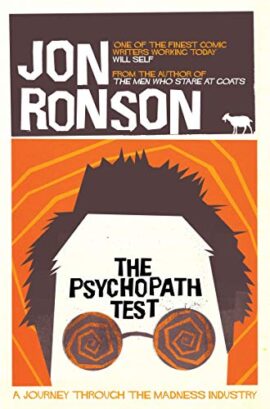
Psychopath Test: A Journey Through the Madness Industry
What if society wasn't fundamentally rational, but was motivated by insanity? This thought sets Jon Ronson on an utterly compelling adventure into the world of madness.Along the way, Jon meets psychopaths, those whose lives have been touched by madness and those whose job it is to diagnose it, including the influential psychologist who developed the Psychopath Test, from whom Jon learns the art of psychopath-spotting. A skill which seemingly reveals that madness could indeed be at the heart of everything . . .Combining Jon Ronson's trademark humour, charm and investigative incision, The Psychopath Test is both entertaining and honest, unearthing dangerous truths and asking serious questions about how we define normality in a world where we are increasingly judged by our maddest edges.
Pegasus
The Darkening Age: The Christian Destruction of the Classical World
In The Darkening Age, Catherine Nixey tells the little-known - and deeply shocking - story of how a militant religion deliberately tried to extinguish the teachings of the Classical world, ushering in unquestioning adherence to the 'one true faith'.The Roman Empire had been generous in embracing and absorbing new creeds. But with the coming of Christianity, everything changed. This new faith, despite preaching peace, was violent, ruthless and intolerant. And once it became the religion of empire, its zealous adherents set about the destruction of the old gods. Their altars were upturned, their temples demolished and their statues hacked to pieces. Books, including great works of philosophy and science, were consigned to the pyre. It was an annihilation.A Book of the Year in the Daily Telegraph, the Spectator, the Observer, and BBC History MagazineA New York Times Book Review Editors' ChoiceWinner of the Royal Society of Literature Jerwood Award for Nonfiction
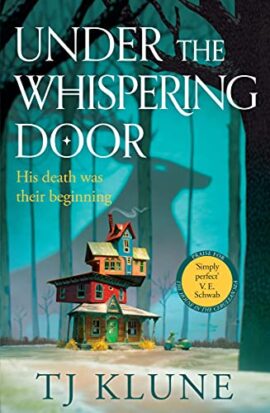
Under the Whispering Door
Welcome to Charon's Crossing.The tea is hot, the scones are fresh, and the dead are just passing through.When a reaper comes to collect Wallace from his own funeral, Wallace begins to suspect he might be dead.And when Hugo, the owner of a peculiar tea shop, promises to help him cross over, Wallace decides he’s definitely dead.But even in death he’s not ready to abandon the life he barely lived, so when Wallace is given one week to cross over, he sets about living a lifetime in seven days.Hilarious, haunting, and kind, Under the Whispering Door is an uplifting story about a life spent at the office and a death spent building a home.
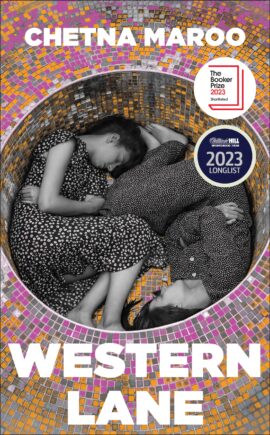
Western Lane
‘WOW. Western Lane is glorious. You’ll want to read it over and over again.‘ - Aravind Adiga, author of The White TigerA taut, enthralling first novel about grief, sisterhood, and a young athlete‘s struggle to transcend herself.Eleven-year-old Gopi has been playing squash since she was old enough to hold a racket. When her mother dies, her father enlists her in a quietly brutal training regimen, and the game becomes her world. Slowly, she grows apart from her sisters. Her life is reduced to the sport, guided by its rhythms: the serve, the volley, the drive, the shot and its echo.But on the court, she is not alone. She is with her pa. She is with Ged, a thirteen-year-old boy with his own formidable talent. She is with the players who have come before her. She is in awe.An indelible coming-of-age story, Chetna Maroo’s first novel captures the ordinary and annihilates it with beauty. Western Lane is a valentine to innocence, to the closeness of sisterhood, to the strange ways we come to know ourselves and each other.
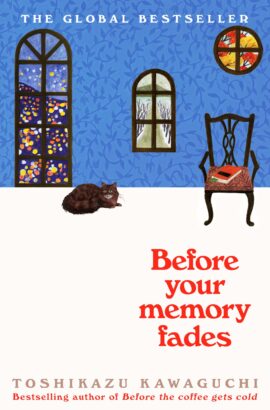
Before Your Memory Fades
The author of Before the Coffee Gets Cold and Tales from the Café returns with another warm hug of a book, interweaving the stories of four new customers at the celebrated time-travelling café.Toshikazu Kawaguchi's touching Before Your Memory Fades, translated from Japanese by Geoffrey Trousselot, explores the age-old question: what would you do if you could travel back in time? More importantly, who would you want to meet, maybe for one last time?On the hillside of Mount Hakodate in northern Japan, Cafe Donna Donna is fabled for its dazzling views of Hakodate port. But that's not all. Like the charming Tokyo cafe Funiculi Funicula, Cafe Donna Donna offers its customers the extraordinary experience of travelling through time.From the author of Before the Coffee Gets Cold and Tales from the Cafe comes another heartfelt story of lost souls hoping to take advantage of the cafe's time-travelling offer. Among some familiar faces, readers will also be introduced to:The daughter who begrudges her deceased parents for leaving her orphaned.The comedian who aches for his beloved and their shared dreams.The younger sister whose grief has become all-consuming.The young man who realizes his love for his childhood friend too late.

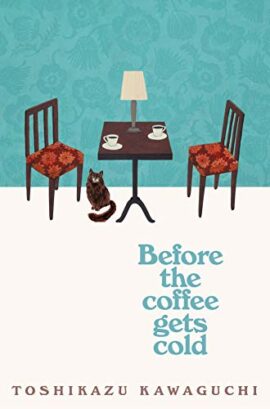
Before the Coffee Gets Cold
In a small back alley in Tokyo, there is a café which has been serving carefully brewed coffee for more than one hundred years. But this coffee shop offers its customers a unique experience: the chance to travel back in time.In Before the Coffee Gets Cold, we meet four visitors, each of whom is hoping to make use of the café’s time-travelling offer, in order to: confront the man who left them, receive a letter from their husband whose memory has been taken by early onset Alzheimer's, to see their sister one last time, and to meet the daughter they never got the chance to know.But the journey into the past does not come without risks: customers must sit in a particular seat, they cannot leave the café, and finally, they must return to the present before the coffee gets cold . . .Toshikazu Kawaguchi’s beautiful, moving story explores the age-old question: what would you change if you could travel back in time? More importantly, who would you want to meet, maybe for one last time?
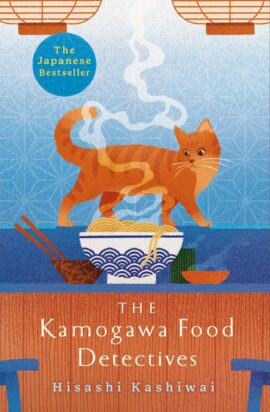
The Kamogawa Food Detectives
The Kamogawa Food Detectives, translated from Japanese by Jesse Kirkwood, is the first book in the bestselling, mouth-watering Japanese sleuthing series for fans of Before the Coffee Gets Cold.What’s the one dish you’d do anything to taste just one more time?Down a quiet backstreet in Kyoto exists a very special restaurant. Run by Koishi Kamogawa and her father Nagare, the Kamogawa Diner treats its customers to wonderfully extravagant meals. But that's not the main reason to stop by . . .The father-daughter duo have started advertising their services as 'food detectives'. Through ingenious investigations, they are capable of recreating a dish from their customers' pasts – dishes that may well hold the keys to forgotten memories and future happiness.From the widower looking for a specific noodle dish that his wife used to cook, to a first love's beef stew, the restaurant of lost recipes provides a link to the past – and a way to a more contented future.A bestseller in Japan, The Kamogawa Food Detectives is a celebration of good company and the power of a delicious meal.
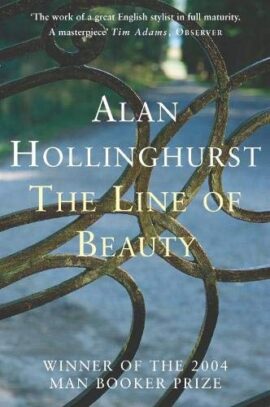
The Line of Beauty
It is the summer of 1983, and young Nick Guest, an innocent in the matters of politics and money, has moved into an attic room in the Notting Hill home of the Feddens: Gerald, an ambitious new Tory MP, his wealthy wife Rachel, and their children Toby and Catherine. Nick had idolized Toby at Oxford, but in his London life it will be the troubled Catherine who becomes his friend and his uneasy responsibility. At the boom years of the mid-80s unfold, Nick becomes caught up in the Feddens' world. In an era of endless possibility, Nick finds himself able to pursue his own private obsession, with beauty a prize as compelling to him as power and riches are to his friends.
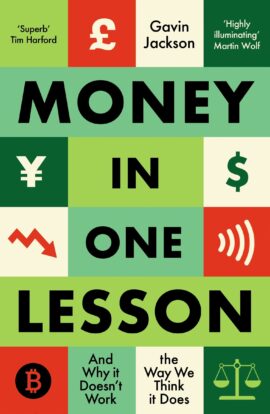
Money in One Lesson
Superb' - Tim Harford, author of How to Make the World Add UpMoney is essential to the economy and how we live our lives, yet is inherently worthless. We can use it to build a home or send us to space, and it can lead to the rise and fall of empires. Few innovations have had such a huge impact on the development of humanity, but money is a shared fiction: a story we believe in so long as others act as if it is true.Money is rarely out of the headlines – from the invention of cryptocurrencies to the problem of high inflation, extraordinary interventions by central banks and the power the West has over the worldwide banking system. In Money in One Lesson, Gavin Jackson answers the most important questions on what money is and how it shapes our world, drawing on vivid examples from throughout history to demystify and show how societies and its citizens, both past and present, are always entwined with matters of money.‘A highly illuminating, well-researched and beautifully written book on one of humanity’s most important innovations’ – Martin Wolf, chief economics commentator, Financial Times
Stone Blind (International Edition)
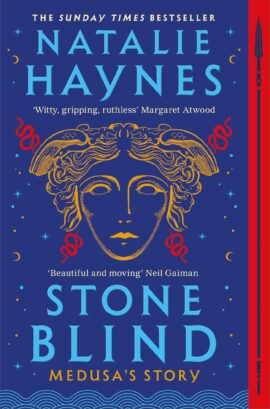
So to mortal men, we are monsters. Because of our flight, our strength. They fear us, so they call us monsters.’Medusa is the sole mortal in a family of gods. Growing up with her Gorgon sisters, she begins to realize that she is the only one who experiences change, the only one who can be hurt. And her mortal lifespan gives her an urgency that her family will never know.When the sea god Poseidon commits an unforgivable act in the temple of Athene, the goddess takes her revenge where she can – and Medusa is changed forever. Writhing snakes replace her hair, and her gaze now turns any living creature to stone. The power cannot be controlled: Medusa can look at nothing without destroying it. She is condemned to a life of shadows and darkness.Until Perseus embarks upon a quest to fetch the head of a Gorgon…
Guest Cat
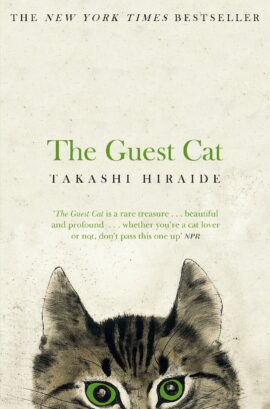
A couple in their thirties live in a small rented cottage in a quiet part of Tokyo. They work at home as freelance writers. They no longer have very much to say to one another.One day a cat invites itself into their small kitchen. She is a beautiful creature. She leaves, but the next day comes again, and then again and again. New, small joys accompany the cat: the days have more light and colour. Life suddenly seems to have more promise for the husband and wife: they go walking together, talk and share stories of the cat and its little ways, play in the nearby garden. But then something happens that will change everything again.The Guest Cat is an exceptionally moving and beautiful novel about the nature of life and the way it feels to live it. The book won Japan's Kiyama Shohei Literary Award, and was a bestseller in France and America.