
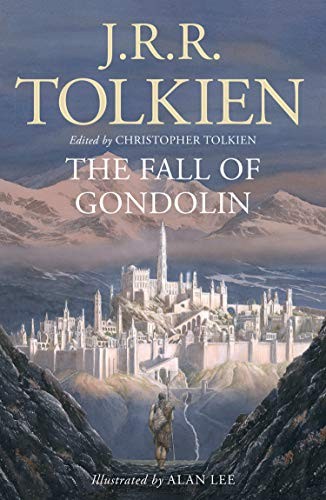
The Fall of Gondolin
3.000,00 د.ج
In the Tale of The Fall of Gondolin are two of the greatest powers in the world. There is Morgoth of the uttermost evil, unseen in this story but ruling over a vast military power from his fortress of Angband. Deeply opposed to Morgoth is Ulmo, second in might only to Manwë, chief of the Valar.
Central to this enmity of the gods is the city of Gondolin, beautiful but undiscoverable. It was built and peopled by Noldorin Elves who, when they dwelt in Valinor, the land of the gods, rebelled against their rule and fled to Middle-earth. Turgon King of Gondolin is hated and feared above all his enemies by Morgoth, who seeks in vain to discover the marvellously hidden city, while the gods in Valinor in heated debate largely refuse to intervene in support of Ulmo’s desires and designs.
Into this world comes Tuor, cousin of Túrin, the instrument of Ulmo’s designs. Guided unseen by him Tuor sets out from the land of his birth on the fearful journey to Gondolin, and in one of the most arresting moments in the history of Middle-earth the sea-god himself appears to him, rising out of the ocean in the midst of a storm. In Gondolin he becomes great; he is wedded to Idril, Turgon’s daughter, and their son is Eärendel, whose birth and profound importance in days to come is foreseen by Ulmo.
At last comes the terrible ending. Morgoth learns through an act of supreme treachery all that he needs to mount a devastating attack on the city, with Balrogs and dragons and numberless Orcs. After a minutely observed account of the fall of Gondolin, the tale ends with the escape of Tuor and Idril, with the child Eärendel, looking back from a cleft in the mountains as they flee southward, at the blazing wreckage of their city. They were journeying into a new story, the Tale of Eärendel, which Tolkien never wrote, but which is sketched out in this book from other sources.
Following his presentation of Beren and Lúthien Christopher Tolkien has used the same ‘history in sequence’ mode in the writing of this edition of The Fall of Gondolin. In the words of J.R.R. Tolkien, it was ‘the first real story of this imaginary world’ and, together with Beren and Lúthien and The Children of Húrin, he regarded it as one of the three ‘Great Tales’ of the Elder Days.

In the Tale of The Fall of Gondolin are two of the greatest powers in the world. There is Morgoth of the uttermost evil, unseen in this story but ruling over a vast military power from his fortress of Angband. Deeply opposed to Morgoth is Ulmo, second in might only to Manwë, chief of the Valar.
Central to this enmity of the gods is the city of Gondolin, beautiful but undiscoverable. It was built and peopled by Noldorin Elves who, when they dwelt in Valinor, the land of the gods, rebelled against their rule and fled to Middle-earth. Turgon King of Gondolin is hated and feared above all his enemies by Morgoth, who seeks in vain to discover the marvellously hidden city, while the gods in Valinor in heated debate largely refuse to intervene in support of Ulmo’s desires and designs.
Into this world comes Tuor, cousin of Túrin, the instrument of Ulmo’s designs. Guided unseen by him Tuor sets out from the land of his birth on the fearful journey to Gondolin, and in one of the most arresting moments in the history of Middle-earth the sea-god himself appears to him, rising out of the ocean in the midst of a storm. In Gondolin he becomes great; he is wedded to Idril, Turgon’s daughter, and their son is Eärendel, whose birth and profound importance in days to come is foreseen by Ulmo.
At last comes the terrible ending. Morgoth learns through an act of supreme treachery all that he needs to mount a devastating attack on the city, with Balrogs and dragons and numberless Orcs. After a minutely observed account of the fall of Gondolin, the tale ends with the escape of Tuor and Idril, with the child Eärendel, looking back from a cleft in the mountains as they flee southward, at the blazing wreckage of their city. They were journeying into a new story, the Tale of Eärendel, which Tolkien never wrote, but which is sketched out in this book from other sources.
Following his presentation of Beren and Lúthien Christopher Tolkien has used the same ‘history in sequence’ mode in the writing of this edition of The Fall of Gondolin. In the words of J.R.R. Tolkien, it was ‘the first real story of this imaginary world’ and, together with Beren and Lúthien and The Children of Húrin, he regarded it as one of the three ‘Great Tales’ of the Elder Days.
Produits similaires
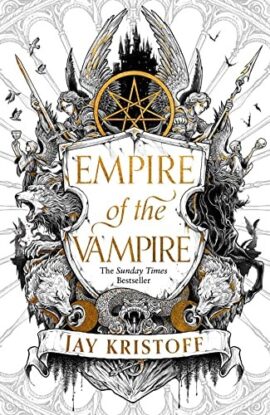
Empire of the Vampire (Empire of the Vampire, Book 1)
Ever since, vampires have waged war against humanity building their eternal empire even as they tear down our own. Gabriel de León, half man, half monster, and last remaining silversaint – a sworn brother of the holy Silver Order dedicated to defending the realm from the creatures of the night – is all that stands between the world and its end.
Imprisoned by the very monsters he has vowed to destroy Gabriel is forced to tell his story – a story of legendary battles and forbidden love, of faith lost and friendships won, of the War of the Blood and the Forever King and the quest for humanity’s last remaining hope:
The Holy Grail.
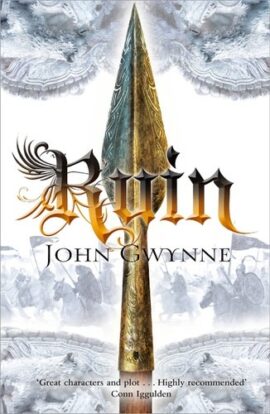
Ruin
The Banished Lands are engulfed in war and chaos. The cunning Queen Rhin has conquered the west and High King Nathair has the cauldron, most powerful of the seven treasures. At his back stands the scheming Calidus and a warband of the Kadoshim, dread demons of the Otherworld. They plan to bring Asroth and his host of the Fallen into the world of flesh, but to do so they need the seven treasures. Nathair has been deceived but now he knows the truth. He has choices to make, choices that will determine the fate of the Banished Lands.
Elsewhere the flame of resistance is growing - Queen Edana finds allies in the swamps of Ardan. Maquin is loose in Tenebral, hunted by Lykos and his corsairs. Here he will witness the birth of a rebellion in Nathair's own realm.
Corban has been swept along by the tide of war. He has suffered, lost loved ones, sought only safety from the darkness. But he will run no more. He has seen the face of evil and he has set his will to fight it. The question is, how? With a disparate band gathered about him - his family, friends, giants, fanatical warriors, an angel and a talking crow he begins the journey to Drassil, the fabled fortress hidden deep in the heart of Forn Forest. For in Drassil lies the spear of Skald, one of the seven treasures, and here it is prophesied that the Bright Star will stand against the Black Sun.
House of Flame and Shadow
Bryce Quinlan never expected to see a world other than Midgard, but now that she has, all she wants is to get back. Everything she loves is in Midgard: her family, her friends, her mate. Stranded in a strange new world, she's going to need all her wits about her to get home again. And that's no easy feat when she has no idea who to trust.
Hunt Athalar has found himself in some deep holes in his life, but this one might be the deepest of all. After a few brief months with everything he ever wanted, he's in the Asteri's dungeons again, stripped of his freedom and without a clue as to Bryce's fate. He's desperate to help her, but until he can escape the Asteri's leash, his hands are quite literally tied.
In this sexy, breathtaking sequel to the #1 bestsellers House of Earth and Blood and House of Sky and Breath, Sarah J. Maas's Crescent City series reaches new heights as Bryce and Hunt's world is brought to the brink of collapse-with its future resting on their shoulders.
Circe
Woman. Witch. Myth. Mortal. Outcast. Lover. Destroyer. Survivor. Circe.
In the house of Helios, god of the sun and mightiest of the Titans, a daughter is born. Circe is a strange child - not powerful and terrible, like her father, nor gorgeous and mercenary like her mother. Scorned and rejected, Circe grows up in the shadows, at home in neither the world of gods or mortals.
But Circe has a dark power of her own: witchcraft. When her gift threatens the gods, she is banished to the island of Aiaia where she hones her occult craft, casting spells, gathering strange herbs and taming wild beasts.
Yet a woman who stands alone will never be left in peace for long - and among her island's guests is an unexpected visitor: the mortal Odysseus, for whom Circe will risk everything. So Circe sets forth her tale, a vivid, mesmerizing epic of family rivalry, love and loss - the defiant, inextinguishable song of woman burning hot and bright through the darkness of a man's world.
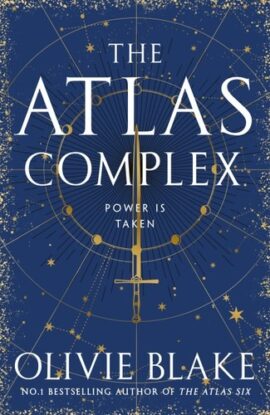
The Atlas Complex
An explosive return to the library leaves the six Alexandrians vulnerable to the lethal terms of their recruitment.
Old alliances quickly fracture as the initiates take opposing strategies as to how to deal with the deadly bargain they have so far failed to uphold. Those who remain with the archives wrestle with the ethics of their astronomical abilities, while elsewhere, an unlikely pair from the Society cohort partner to influence politics on a global stage.
And still the outside world mobilizes to destroy them, while the Caretaker himself, Atlas Blakely, may yet succeed with a plan foreseen to have world-ending stakes. It’s a race to survive as the six Society recruits are faced with the question of what they're willing to betray for limitless power―and who will be destroyed along the way.
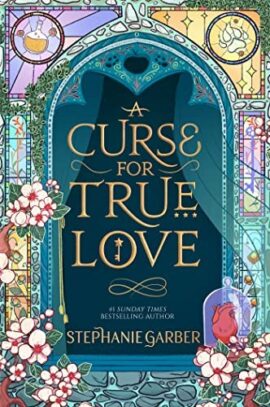
A Curse for True Love
Evangeline Fox ventured to the Magnificent North in search of her happy ending, and it seems as if she has it. She’s married to a handsome prince and lives in a legendary castle. But Evangeline has no idea of the devastating price she’s paid for this fairytale. She doesn’t know what she has lost, and her husband is determined to make sure she never finds out . . . but first he must kill Jacks, the Prince of Hearts.
Blood will be shed, hearts will be stolen, and true love will be put to the test in A Curse for True Love, the breathlessly anticipated conclusion to the Once Upon A Broken Heart trilogy.