


The Emperor of All Maladies
3.000,00 د.ج
Book by Mukherjee, Siddhartha
2
Items sold in last 3 days
0
People watching this product now!
Estimated delivery dates: mai 13, 2026 – mai 20, 2026

Produits similaires

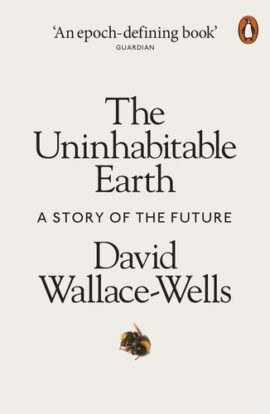
The Uninhabitable Earth: A Story of the Future
**SUNDAY TIMES AND THE NEW YORK TIMES BESTSELLER**
'An epoch-defining book' Matt Haig
'If you read just one work of non-fiction this year, it should probably be this' David Sexton, Evening Standard
It is worse, much worse, than you think.
The slowness of climate change is a fairy tale, perhaps as pernicious as the one that says it isn't happening at all, and if your anxiety about it is dominated by fears of sea-level rise, you are barely scratching the surface of what terrors are possible, even within the lifetime of a teenager today.
Over the past decades, the term "Anthropocene" has climbed into the popular imagination - a name given to the geologic era we live in now, one defined by human intervention in the life of the planet. But however sanguine you might be about the proposition that we have ravaged the natural world, which we surely have, it is another thing entirely to consider the possibility that we have only provoked it, engineering first in ignorance and then in denial a climate system that will now go to war with us for many centuries, perhaps until it destroys us. In the meantime, it will remake us, transforming every aspect of the way we live-the planet no longer nurturing a dream of abundance, but a living nightmare.
'An epoch-defining book' Matt Haig
'If you read just one work of non-fiction this year, it should probably be this' David Sexton, Evening Standard
It is worse, much worse, than you think.
The slowness of climate change is a fairy tale, perhaps as pernicious as the one that says it isn't happening at all, and if your anxiety about it is dominated by fears of sea-level rise, you are barely scratching the surface of what terrors are possible, even within the lifetime of a teenager today.
Over the past decades, the term "Anthropocene" has climbed into the popular imagination - a name given to the geologic era we live in now, one defined by human intervention in the life of the planet. But however sanguine you might be about the proposition that we have ravaged the natural world, which we surely have, it is another thing entirely to consider the possibility that we have only provoked it, engineering first in ignorance and then in denial a climate system that will now go to war with us for many centuries, perhaps until it destroys us. In the meantime, it will remake us, transforming every aspect of the way we live-the planet no longer nurturing a dream of abundance, but a living nightmare.

An Anthropologist on Mars
'An inexhaustible tourist at the farther reaches of the mind, Sacks presents, in sparse, unsentimental prose, the stories of seven of his patients. The result is as rich, vivid and compelling as any collection of short fictional stories' Independent on Sunday As with his previous bestseller, The Man Who Mistook His Wife for a Hat, Oliver Sacks uses case studies to illustrate the myriad ways in which neurological conditions can affect our sense of self, our experience of the world, and how we relate to those around us. Writing with his trademark blend of scientific rigour and human compassion, he describes patients such as the colour-blind painter or the surgeon with compulsive tics that disappear in the operating theatre; patients for whom disorientation and alienation but also adaptation are inescapable facts of life. 'Sacks' great gift is his capacity to place himself in the position of his subjects, to see the world the way they see it and to empathize with their condition with grea

Dear Ijeawele, or a Feminist Manifesto in Fifteen Suggestions
An instant feminist classic, and perfect gift for all parents, women, and people working towards gender equality. Here is a brilliant, beautifully readable, and above all practical expansion of the ideas this iconic author began to explore in her bestselling manifesto, We Should All Be Feminists.
A few years ago, Chimamanda Ngozi Adichie received a letter from a dear friend from childhood, asking how to raise her new baby girl a feminist.
Although she has written and spoken out widely about feminism, Adichie wasn't sure how to advise her friend Ijeawele. But as a person who'd babysat, had loved her nieces and nephews, and now, too, was the mother of a daughter herself, she thought she would try. So she sent Ijeawele a letter with some suggestions--15 in all--which she has now decided to share with the world.
Compelling, direct, wryly funny, and perceptive, Dear Ijeawele offers specifics on how we can empower our daughters to become strong, independent women. Here, too, are ways parents can raise their children--both sons and daughters--beyond a culture's limiting gender prescriptions. This short, sharp work rings out in Chimamanda's voice: infused with deep honesty, clarity, strength, and above all love. She speaks to the important work of raising a girl in today's world, and provides her readers with a clear proposal for inclusive, nuanced thinking. Here we have not only a rousing manifesto, but a powerful gift for all people invested in the idea of creating a just society--an endeavour now more urgent and important than ever.
A few years ago, Chimamanda Ngozi Adichie received a letter from a dear friend from childhood, asking how to raise her new baby girl a feminist.
Although she has written and spoken out widely about feminism, Adichie wasn't sure how to advise her friend Ijeawele. But as a person who'd babysat, had loved her nieces and nephews, and now, too, was the mother of a daughter herself, she thought she would try. So she sent Ijeawele a letter with some suggestions--15 in all--which she has now decided to share with the world.
Compelling, direct, wryly funny, and perceptive, Dear Ijeawele offers specifics on how we can empower our daughters to become strong, independent women. Here, too, are ways parents can raise their children--both sons and daughters--beyond a culture's limiting gender prescriptions. This short, sharp work rings out in Chimamanda's voice: infused with deep honesty, clarity, strength, and above all love. She speaks to the important work of raising a girl in today's world, and provides her readers with a clear proposal for inclusive, nuanced thinking. Here we have not only a rousing manifesto, but a powerful gift for all people invested in the idea of creating a just society--an endeavour now more urgent and important than ever.
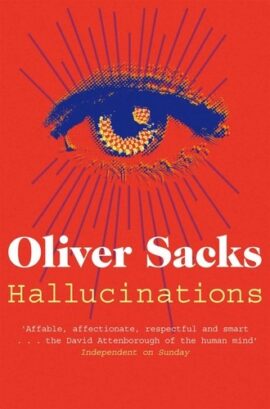
Hallucinations
Have you ever seen something that wasn't really there? Heard someone call your name in an empty house? Sensed someone following you and turned around to find nothing? Hallucinations don't belong wholly to the insane. Much more commonly, they are linked to sensory deprivation, intoxication, illness, or injury. In some conditions, hallucinations can lead to religious epiphanies or even the feeling of leaving one's own body. Humans have always sought such life-changing visions, and for thousands of years have used hallucinogenic compounds to achieve them. In this book, with his usual elegance, curiosity, and compassion, Dr Sacks weaves together stories of his patients and of his own mind-altering experiences to illuminate what hallucinations tell us about the organization and structure of our brains, how they have influenced every culture's folklore and art, and why the potential for hallucination is present in us all, a vital part of the human condition.

Musicophilia: Tales of Music and the Brain
'A humane discourse on the fragility of our minds, of the bodies that give rise to them, and of the world they create for us. This book is filled with wonders' Daily Telegraph Oliver Sacks' compassionate tales of people struggling to adapt to different neurological conditions have fundamentally changed the way we think of our own minds. In Musicophilia, he examines the powers of music through the individual experiences of patients, musicians and everyday people those struck by affliction, unusual talent and even, in one case, by lightning to show not only that music occupies more areas of our brain than language does, but also that it can torment, calm, organize and heal. Always wise and compellingly readable, these stories alter our conception of who we are and how we function, and show us an essential part of what it is to be human. 'Fascinating. Music, as Sacks explains, "can pierce the heart directly". And this is the truth that he so brilliantly focuses upon that music saves, consoles and nourishes us' Daily Mail 'Irresistible, astonishing and moving' Spectator 'Deeply warm and sympathetic' Guardian
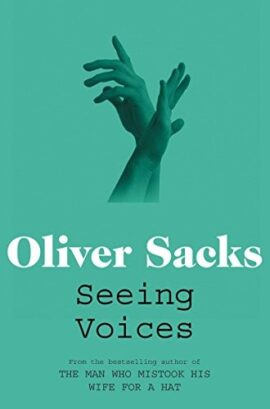
Seeing Voices: A Journey into the World of the Deaf
A physician, professor of neurology and author, Oliver Sacks (1933-2015) has been described by the New York Times as 'a kind of poet laureate of contemporary medicine'. His books are made up of case histories of his patients, and explore both their neurological disorders and the strategies they adopted to cope with them.In Seeing Voices, a journey into the world of the profoundly deaf, Sacks examines the consequences of living in silence, including the different ways in which the deaf and the hearing learn to categorize and convey the experience of their respective worlds.
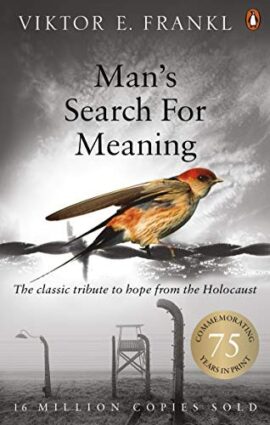
Man’s Search For Meaning: The classic tribute to hope from the Holocaust
16 MILLION COPIES SOLD
'A book to read, to cherish, to debate, and one that will ultimately keep the memories of the victims alive' John Boyne, author of The Boy in the Striped Pyjamas
A prominent Viennese psychiatrist before the war, Viktor Frankl was uniquely able to observe the way that both he and others in Auschwitz coped (or didn't) with the experience. He noticed that it was the men who comforted others and who gave away their last piece of bread who survived the longest - and who offered proof that everything can be taken away from us except the ability to choose our attitude in any given set of circumstances. The sort of person the concentration camp prisoner became was the result of an inner decision and not of camp influences alone. Frankl came to believe man's deepest desire is to search for meaning and purpose. This outstanding work offers us all a way to transcend suffering and find significance in the art of living.
'A book to read, to cherish, to debate, and one that will ultimately keep the memories of the victims alive' John Boyne, author of The Boy in the Striped Pyjamas
A prominent Viennese psychiatrist before the war, Viktor Frankl was uniquely able to observe the way that both he and others in Auschwitz coped (or didn't) with the experience. He noticed that it was the men who comforted others and who gave away their last piece of bread who survived the longest - and who offered proof that everything can be taken away from us except the ability to choose our attitude in any given set of circumstances. The sort of person the concentration camp prisoner became was the result of an inner decision and not of camp influences alone. Frankl came to believe man's deepest desire is to search for meaning and purpose. This outstanding work offers us all a way to transcend suffering and find significance in the art of living.