
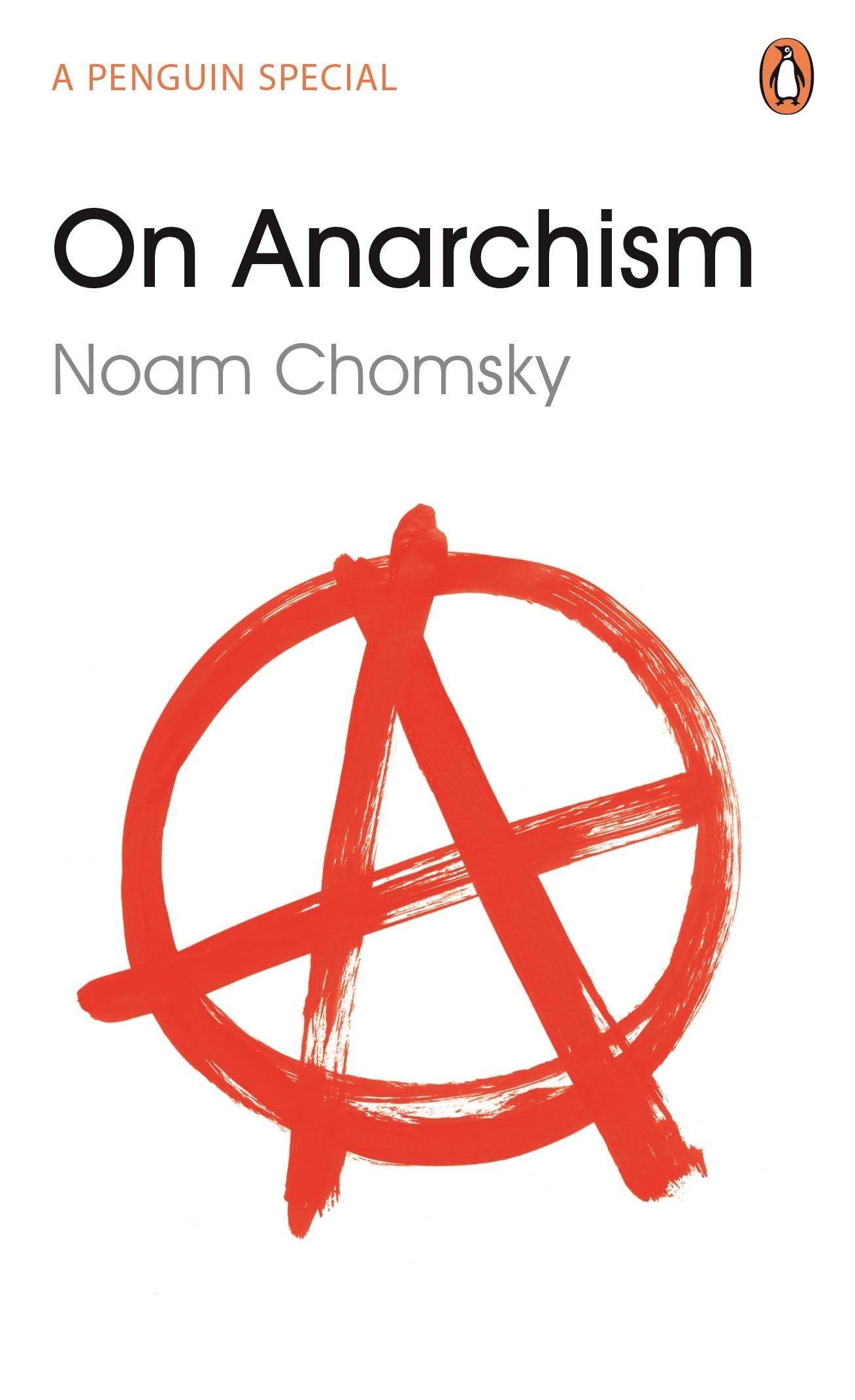
On Anarchism
2.691,00 د.ج
BRAND NEW, Exactly same ISBN as listed, Please double check ISBN carefully before ordering.
7
Items sold in last 3 days
0
People watching this product now!
Estimated delivery dates: mai 3, 2026 – mai 10, 2026

Produits similaires

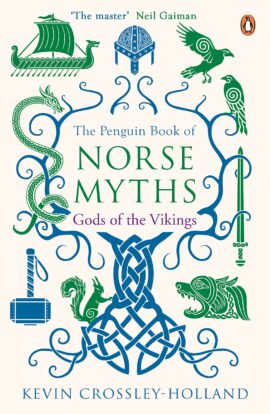
The Penguin Book of Norse Myths: Gods of the Vikings
Burning ice, biting flame: that is how life began' The extraordinary Scandinavian myth cycle is one of the most enduring, exciting, dramatic and compelling of the world's great stories. The Penguin Book of the Norse Myths compellingly retells these stories for the modern reader, taking us from the creation of the world through the building of Asgard's Wall to the final end in Ragnarok. You'll discover how Thor got his hammer and how Odin lost his eye, the terrible price of binding the wolf Fenrir and why Loki the trickster can never be trusted. The Norse myths are as thrilling to read as they are of vast cultural and historical importance. In this gripping book Kevin Crossley-Holland brings alive the passion, cruelty and heroism of these unforgettable stories.

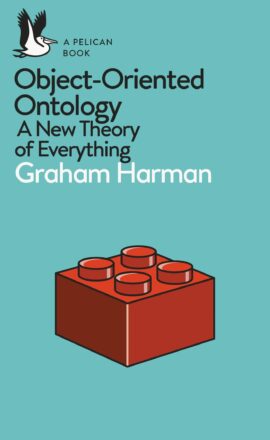
Object-Oriented Ontology: A New Theory of Everything (Pelican Books)
We humans tend to believe that things are only real in as much as we perceive them, an idea reinforced by modern philosophy, which privileges us as special, radically different in kind from all other objects. But as Graham Harman, one of the theory's leading exponents, shows, Object-Oriented Ontology (OOO) rejects the idea of human specialness: the world, he states, is clearly not the world as manifest to humans. "To think a reality beyond our thinking is not nonsense, but obligatory." At OOO's heart is the idea that objects—whether real, fictional, natural, artificial, human, or non-human—are mutually autonomous. This core idea has significance for nearly every field of inquiry which is concerned in some way with the systematic interaction of objects, and the degree to which individual objects resist full participation in such systems. In this brilliant new introduction, Graham Harman lays out OOO's history, ideas, and impact, taking in art and literature, politics and natural science along the way. From Sherlock Holmes, unicorns, and videogames to Dadaism, Voltaire, and string theory, this book will change the way you understand everything.
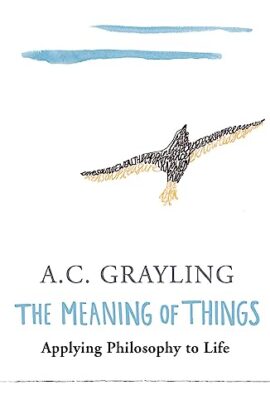
The Meaning of Things
A refreshing distillation of insights into the human condition, by one of the best-known and most popular philosophers in the UK.Thinking about life, what it means and what it holds in store does not have to be a despondent experience, but rather can be enlightening and uplifting. A life truly worth living is one that is informed and considered so a degree of philosophical insight into the inevitabilities of the human condition is inherently important and such an approach will help us to deal with real personal dilemmas.This book is an accessible, lively and thought-provoking series of linked commentaries, based on A. C. Grayling's 'The Last Word' column in the GUARDIAN. Its aim is not to persuade readers to accept one particular philosophical point of view or theory, but to help us consider the wonderful range of insights which can be drawn from an immeasurably rich history of philosophical thought.Concepts covered include courage, love, betrayal, ambition, cruelty, wisdom, passion, beauty and death. This will be a wonderfully stimulating read and act as an invaluable guide as to what is truly important in living life, whether facing success, failure, justice, wrong, love, loss or any of the other profound experience life throws out.
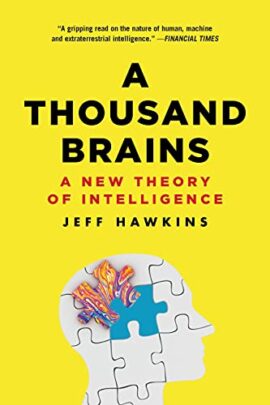
A Thousand Brains
A bestselling author, neuroscientist, and computer engineer unveils a theory of intelligence that will revolutionize our understanding of the brain and the future of AI.For all of neuroscience's advances, we've made little progress on its biggest question: How do simple cells in the brain create intelligence?Jeff Hawkins and his team discovered that the brain uses maplike structures to build a model of the world—not just one model, but hundreds of thousands of models of everything we know. This discovery allows Hawkins to answer important questions about how we perceive the world, why we have a sense of self, and the origin of high-level thought.A Thousand Brains heralds a revolution in the understanding of intelligence. It is a big-think book, in every sense of the word.One of the Financial Times' Best Books of 2021One of Bill Gates' Five Favorite Books of 2021