
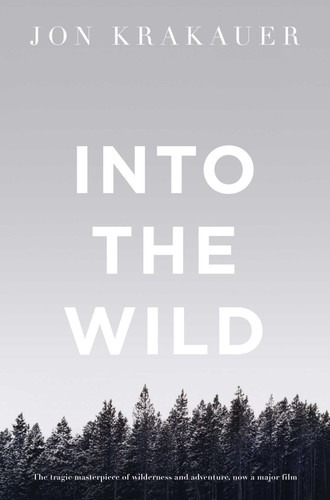
Into the Wild
2.600,00 د.ج
An adventure about living off the land in Alaska
1
Item sold in last 3 days
0
People watching this product now!
Estimated delivery dates: mai 13, 2026 – mai 20, 2026

Produits similaires
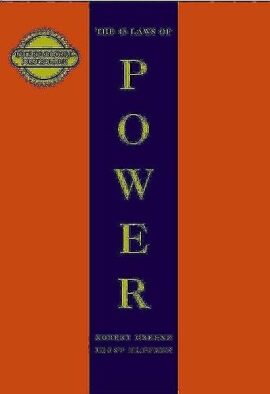
The 48 Laws Of Power
Amoral, cunning, ruthless, and instructive, this piercing work distills three thousand years of the history of power in to forty-eight well explicated laws. As attention-grabbing in its design as it is in its content, this bold volume outlines the laws of power in their unvarnished essence, synthesizing the philosophies of Machiavelli, Sun-tzu, Carl von Clausewitz, and other great thinkers.
Some laws teach the need for prudence ("Law 1: Never Outshine the Master"), the virtue of stealth ("Law 3: Conceal Your Intentions"), and many demand the total absence of mercy ("Law 15: Crush Your Enemy Totally"), but like it or not, all have applications in real life.
Illustrated through the tactics of Queen Elizabeth I, Henry Kissinger, P. T. Barnum, and other famous figures who have wielded--or been victimized by--power, these laws will fascinate any reader interested in gaining, observing, or defending against ultimate control.
Some laws teach the need for prudence ("Law 1: Never Outshine the Master"), the virtue of stealth ("Law 3: Conceal Your Intentions"), and many demand the total absence of mercy ("Law 15: Crush Your Enemy Totally"), but like it or not, all have applications in real life.
Illustrated through the tactics of Queen Elizabeth I, Henry Kissinger, P. T. Barnum, and other famous figures who have wielded--or been victimized by--power, these laws will fascinate any reader interested in gaining, observing, or defending against ultimate control.
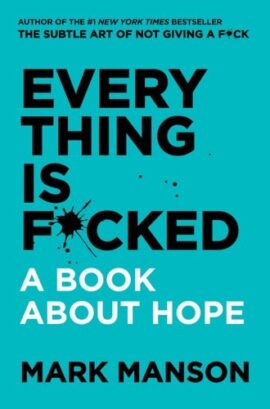
Everything Is F*cked: A Book About Hope
New York Times Bestseller
“Just because everything appears to be a mess doesn’t mean you have to be one. Mark Manson’s book is a call to arms for a better life and better world and could not be more needed right now.” — Ryan Holiday, bestselling author of The Obstacle is the Way and Ego is the Enemy
From the author of the international mega-bestseller The Subtle Art of Not Giving A F*ck comes a counterintuitive guide to the problems of hope.
We live in an interesting time. Materially, everything is the best it’s ever been—we are freer, healthier and wealthier than any people in human history. Yet, somehow everything seems to be irreparably and horribly f*cked—the planet is warming, governments are failing, economies are collapsing, and everyone is perpetually offended on Twitter. At this moment in history, when we have access to technology, education and communication our ancestors couldn’t even dream of, so many of us come back to an overriding feeling of hopelessness.
What’s going on? If anyone can put a name to our current malaise and help fix it, it’s Mark Manson. In 2016, Manson published The Subtle Art of Not Giving A F*ck, a book that brilliantly gave shape to the ever-present, low-level hum of anxiety that permeates modern living. He showed us that technology had made it too easy to care about the wrong things, that our culture had convinced us that the world owed us something when it didn’t—and worst of all, that our modern and maddening urge to always find happiness only served to make us unhappier. Instead, the “subtle art” of that title turned out to be a bold challenge: to choose your struggle; to narrow and focus and find the pain you want to sustain. The result was a book that became an international phenomenon, selling millions of copies worldwide while becoming the #1 bestseller in 13 different countries.
In Everthing Is F*cked, Manson turns his gaze from the inevitable flaws within each individual self to the endless calamities taking place in the world around us. Drawing from the pool of psychological research on these topics, as well as the timeless wisdom of philosophers such as Plato, Nietzsche, and Tom Waits, he dissects religion and politics and the uncomfortable ways they have come to resemble one another. He looks at our relationships with money, entertainment and the internet, and how too much of a good thing can psychologically eat us alive. He openly defies our definitions of faith, happiness, freedom—and even of hope itself.
With his usual mix of erudition and where-the-f*ck-did-that-come-from humor, Manson takes us by the collar and challenges us to be more honest with ourselves and connected with the world in ways we probably haven’t considered before. It’s another counterintuitive romp through the pain in our hearts and the stress of our soul. One of the great modern writers has produced another book that will set the agenda for years to come.
“Just because everything appears to be a mess doesn’t mean you have to be one. Mark Manson’s book is a call to arms for a better life and better world and could not be more needed right now.” — Ryan Holiday, bestselling author of The Obstacle is the Way and Ego is the Enemy
From the author of the international mega-bestseller The Subtle Art of Not Giving A F*ck comes a counterintuitive guide to the problems of hope.
We live in an interesting time. Materially, everything is the best it’s ever been—we are freer, healthier and wealthier than any people in human history. Yet, somehow everything seems to be irreparably and horribly f*cked—the planet is warming, governments are failing, economies are collapsing, and everyone is perpetually offended on Twitter. At this moment in history, when we have access to technology, education and communication our ancestors couldn’t even dream of, so many of us come back to an overriding feeling of hopelessness.
What’s going on? If anyone can put a name to our current malaise and help fix it, it’s Mark Manson. In 2016, Manson published The Subtle Art of Not Giving A F*ck, a book that brilliantly gave shape to the ever-present, low-level hum of anxiety that permeates modern living. He showed us that technology had made it too easy to care about the wrong things, that our culture had convinced us that the world owed us something when it didn’t—and worst of all, that our modern and maddening urge to always find happiness only served to make us unhappier. Instead, the “subtle art” of that title turned out to be a bold challenge: to choose your struggle; to narrow and focus and find the pain you want to sustain. The result was a book that became an international phenomenon, selling millions of copies worldwide while becoming the #1 bestseller in 13 different countries.
In Everthing Is F*cked, Manson turns his gaze from the inevitable flaws within each individual self to the endless calamities taking place in the world around us. Drawing from the pool of psychological research on these topics, as well as the timeless wisdom of philosophers such as Plato, Nietzsche, and Tom Waits, he dissects religion and politics and the uncomfortable ways they have come to resemble one another. He looks at our relationships with money, entertainment and the internet, and how too much of a good thing can psychologically eat us alive. He openly defies our definitions of faith, happiness, freedom—and even of hope itself.
With his usual mix of erudition and where-the-f*ck-did-that-come-from humor, Manson takes us by the collar and challenges us to be more honest with ourselves and connected with the world in ways we probably haven’t considered before. It’s another counterintuitive romp through the pain in our hearts and the stress of our soul. One of the great modern writers has produced another book that will set the agenda for years to come.

In Cold Blood
Controversial and compelling, In Cold Blood reconstructs the murder in 1959 of a Kansas farmer, his wife and both their children. Truman Capote's comprehensive study of the killings and subsequent investigation explores the circumstances surrounding this terrible crime and the effect it had on those involved. At the centre of his study are the amoral young killers Perry Smith and Dick Hickcock, who, vividly drawn by Capote, are shown to be reprehensible yet entirely and frighteningly human. The book that made Capote's name, In Cold Blood is a seminal work of modern prose, a remarkable synthesis of journalistic skill and powerfully evocative narrative.
An alternate cover of this ISBN can be found here.
An alternate cover of this ISBN can be found here.

We Should All Be Feminists
A personal and powerful essay from Chimamanda Ngozi Adichie, the bestselling author of ‘Americanah’ and ‘Half of a Yellow Sun’, based on her 2013 TEDx Talk of the same name.
What does “feminism” mean today? That is the question at the heart of We Should All Be Feminists, a personal, eloquently-argued essay – adapted from her much-viewed Tedx talk of the same name – by Chimamanda Ngozi Adichie, the award-winning author of ‘Americanah’ and ‘Half of a Yellow Sun’. With humour and levity, here Adichie offers readers a unique definition of feminism for the twenty-first century – one rooted in inclusion and awareness. She shines a light not only on blatant discrimination, but also the more insidious, institutional behaviours that marginalise women around the world, in order to help readers of all walks of life better understand the often masked realities of sexual politics. Throughout, she draws extensively on her own experiences – in the U.S., in her native Nigeria – offering an artfully nuanced explanation of why the gender divide is harmful for women and men, alike. Argued in the same observant, witty and clever prose that has made Adichie a best-selling novelist, here is one remarkable author’s exploration of what it means to be a woman today – and an of-the-moment rallying cry for why we should all be feminists.
What does “feminism” mean today? That is the question at the heart of We Should All Be Feminists, a personal, eloquently-argued essay – adapted from her much-viewed Tedx talk of the same name – by Chimamanda Ngozi Adichie, the award-winning author of ‘Americanah’ and ‘Half of a Yellow Sun’. With humour and levity, here Adichie offers readers a unique definition of feminism for the twenty-first century – one rooted in inclusion and awareness. She shines a light not only on blatant discrimination, but also the more insidious, institutional behaviours that marginalise women around the world, in order to help readers of all walks of life better understand the often masked realities of sexual politics. Throughout, she draws extensively on her own experiences – in the U.S., in her native Nigeria – offering an artfully nuanced explanation of why the gender divide is harmful for women and men, alike. Argued in the same observant, witty and clever prose that has made Adichie a best-selling novelist, here is one remarkable author’s exploration of what it means to be a woman today – and an of-the-moment rallying cry for why we should all be feminists.
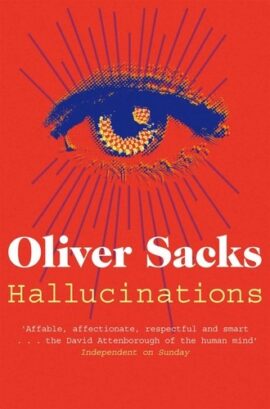
Hallucinations
Have you ever seen something that wasn't really there? Heard someone call your name in an empty house? Sensed someone following you and turned around to find nothing? Hallucinations don't belong wholly to the insane. Much more commonly, they are linked to sensory deprivation, intoxication, illness, or injury. In some conditions, hallucinations can lead to religious epiphanies or even the feeling of leaving one's own body. Humans have always sought such life-changing visions, and for thousands of years have used hallucinogenic compounds to achieve them. In this book, with his usual elegance, curiosity, and compassion, Dr Sacks weaves together stories of his patients and of his own mind-altering experiences to illuminate what hallucinations tell us about the organization and structure of our brains, how they have influenced every culture's folklore and art, and why the potential for hallucination is present in us all, a vital part of the human condition.
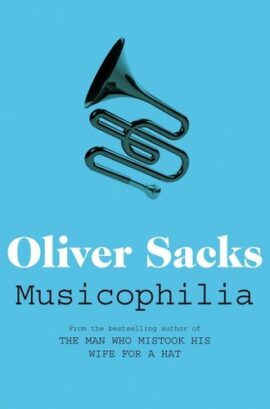
Musicophilia: Tales of Music and the Brain
'A humane discourse on the fragility of our minds, of the bodies that give rise to them, and of the world they create for us. This book is filled with wonders' Daily Telegraph Oliver Sacks' compassionate tales of people struggling to adapt to different neurological conditions have fundamentally changed the way we think of our own minds. In Musicophilia, he examines the powers of music through the individual experiences of patients, musicians and everyday people those struck by affliction, unusual talent and even, in one case, by lightning to show not only that music occupies more areas of our brain than language does, but also that it can torment, calm, organize and heal. Always wise and compellingly readable, these stories alter our conception of who we are and how we function, and show us an essential part of what it is to be human. 'Fascinating. Music, as Sacks explains, "can pierce the heart directly". And this is the truth that he so brilliantly focuses upon that music saves, consoles and nourishes us' Daily Mail 'Irresistible, astonishing and moving' Spectator 'Deeply warm and sympathetic' Guardian
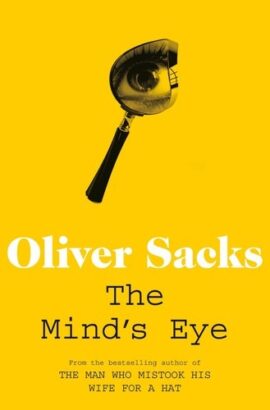
The Mind’s Eye
'Oliver Sacks is a perfect antidote to the anaesthetic of familiarity. His writing turns brains and minds transparent' Observer How does the brain perceive and interpret information from the eye? And what happens when the process is disrupted? In The Mind's Eye, Oliver Sacks tells the stories of people who are able to navigate the world and communicate with others despite losing what many of us consider indispensable senses and abilities: the capacity to recognize faces, the sense of three-dimensional space, the ability to read, the sense of sight. For all of these people, the challenge is to adapt to a radically new way of being in the world and The Mind's Eye is testament to the myriad ways that we, as humans, are capable of rising to this challenge. 'The Mind's Eye is about the possibility of recovery and the inexorable decline of the ageing individual. From this collision of incompatible truths, tragedy is made ...making this Sacks's most powerful book to date' Sunday Telegraph 'Packed with wisdom, humour, extraordinary human stories and reflections on how we all perceive the world ...He ends with a brilliant discussion of blindness and the ways in which blind people develop visual concepts. Heartily recommended' Reader's Digest
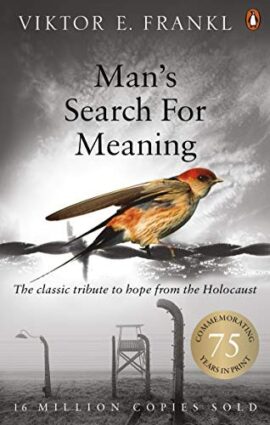
Man’s Search For Meaning: The classic tribute to hope from the Holocaust
16 MILLION COPIES SOLD
'A book to read, to cherish, to debate, and one that will ultimately keep the memories of the victims alive' John Boyne, author of The Boy in the Striped Pyjamas
A prominent Viennese psychiatrist before the war, Viktor Frankl was uniquely able to observe the way that both he and others in Auschwitz coped (or didn't) with the experience. He noticed that it was the men who comforted others and who gave away their last piece of bread who survived the longest - and who offered proof that everything can be taken away from us except the ability to choose our attitude in any given set of circumstances. The sort of person the concentration camp prisoner became was the result of an inner decision and not of camp influences alone. Frankl came to believe man's deepest desire is to search for meaning and purpose. This outstanding work offers us all a way to transcend suffering and find significance in the art of living.
'A book to read, to cherish, to debate, and one that will ultimately keep the memories of the victims alive' John Boyne, author of The Boy in the Striped Pyjamas
A prominent Viennese psychiatrist before the war, Viktor Frankl was uniquely able to observe the way that both he and others in Auschwitz coped (or didn't) with the experience. He noticed that it was the men who comforted others and who gave away their last piece of bread who survived the longest - and who offered proof that everything can be taken away from us except the ability to choose our attitude in any given set of circumstances. The sort of person the concentration camp prisoner became was the result of an inner decision and not of camp influences alone. Frankl came to believe man's deepest desire is to search for meaning and purpose. This outstanding work offers us all a way to transcend suffering and find significance in the art of living.