
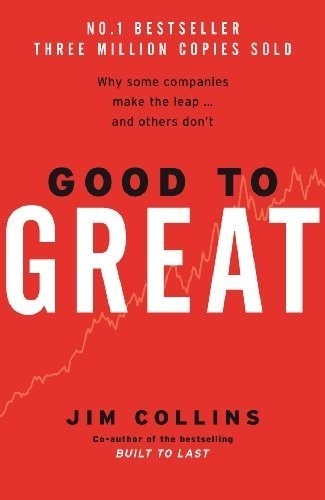
Good To Great : Why Some Companies Make The Leap and Others Don’t
5.300,00 د.ج
This carefully researched and well-written book disproves most of the current management hype-from the cult of the superhuman CEO to the cult of IT to the acquisitions and merger mania. It will not enable mediocrity to become competence. But it should enable competence to become excellence.
1
Item sold in last 3 days
0
People watching this product now!
Estimated delivery dates: juin 11, 2026 – juin 18, 2026

Description
This carefully researched and well-written book disproves most of the current management hype-from the cult of the superhuman CEO to the cult of IT to the acquisitions and merger mania. It will not enable mediocrity to become competence. But it should enable competence to become excellence.
Produits similaires
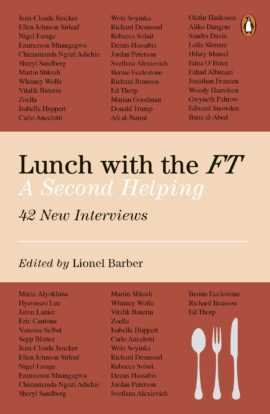
Lunch with the FT: A Second Helping
Lunch with the Financial Times has been a permanent fixture in the Financial Times for almost 25 years, featuring presidents, film stars, musical icons and business leaders from around the world. The column is now as well-established institution which has reinvigorated the art of conversation in the convivial, intimate environment of a long boozy lunch. On its 25th anniversary, Lunch with the Financial Times 2 will showcase the most entertaining, incisive and fascinating interviews from the past five years including those with Donald Trump, Sheryl Sandberg, Richard Branson, Yanis Varoufakis, Zadie Smith, Nigel Farage, Russell Brand and David Guetta, illustrated in full colour with James Ferguson's famous portraits.
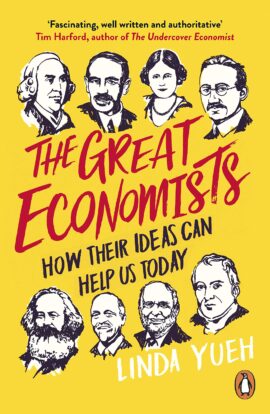
Great Economists
A Times Best Business Book of 2018What can the ideas of history's greatest economists tell us about the most important issues of our time?'The best place to start to learn about the very greatest economists of all time' Professor Tyler Cowen, author of The Complacent Class and The Great StagnationSince the days of Adam Smith, economists have grappled with a series of familiar problems - but often their ideas are hard to digest, before we even try to apply them to today's issues. Linda Yueh is renowned for her combination of erudition, as an accomplished economist herself, and accessibility, as a leading writer and broadcaster in this field: and in The Great Economists she explains the key thoughts of history's greatest economists, how their lives and times affected their ideas, how our lives have been influenced by their work, and how they could help with the policy challenges that we face today.In the light of current economic problems, and in particular economic growth, Yueh explores the thoughts of economists from Adam Smith and David Ricardo through Joan Robinson and Milton Friedman to Douglass North and Robert Solow. Along the way she asks, for example: what do the ideas of Karl Marx tell us about the likely future for the Chinese economy? How does the work of John Maynard Keynes, who argued for government spending to create full employment, help us think about state investment? And with globalization in trouble, what can we learn about handling Brexit and Trumpism?In one accessible volume, this expert new voice provides an overarching guide to the biggest questions of our time.The Great Economists includes:Adam SmithDavid RicardoKarl MarxAlfred MarshallIrving FisherJohn Maynard KeynesJoseph SchumpeterFriedrich HayekJoan RobinsonMilton FriedmanDouglass NorthRobert Solow'Economics students, like others, can learn a lot from this book' - Professor Paul Collier, author of The Bottom Billion'Not only a great way to learn in an easily readable manner about some of the greatest economic influences of the past, but also a good way to test your own a priori assumptions about some of the big challenges of our time.' - Lord Jim O'Neill, former Chairman at Goldman Sachs Asset Management, former UK Treasury Minister, and author of The Growth Map'An extremely engaging survey of the lifetimes and ideas of the great thinkers of economic history.' - Professor Kenneth Rogoff, author of The Curse of Cash and co-author of This Time is Different'This book is a very readable introduction to the lives and thinking of the greats.' - Professor Raghuram Rajan, former Governor of the Reserve Bank of India, and author of I Do What I Do and Fault Lines'Read it not only to learn about the world's great economists, but also to see how consequential thought innovations can be, and have been.' - Mohamed el-Erian, Chief Economic Adviser at Allianz, former CEO of PIMCO
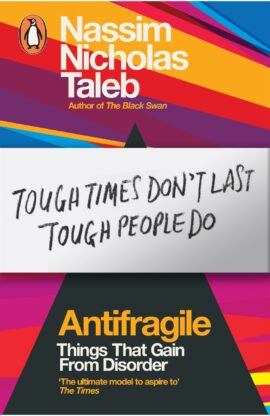
Antifragile
Paperback. Pub Date :2013-06-06 Pages: 544 Language: English Publisher: Penguin Books The hottest thinker in the world Bryan Appleyard. Sunday TimesIn The Black Swan. Taleb showed us that highly improbable and unpredictable events underlie almost everything about our world ... Here Taleb stands uncer-tainty on its head. making it desirable. even necessary The antifragile is beyond the resilient or robust The resil-ient resists shocks and stays the same: the antifragile gets better and better.Just as human bones get stronger when subjected to stress and tension. many things in life benefit from stress. disorder. volatility. and turmoil. What Taleb has identified and calls antifragile are things that not only gain from chaos but need it in order to survive and flourish.Whats more . the antifragile is immune to prediction errors and protected from adverse events. Why is the cit...
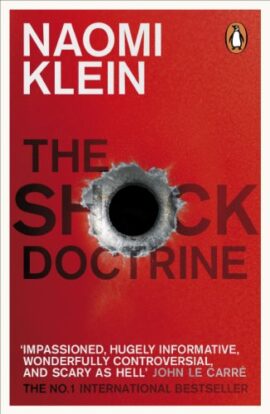
The Shock Doctrine: The Rise of Disaster Capitalism
Around the world in Britain, the United States, Asia and the Middle East, there are people with power who are cashing in on chaos: exploiting bloodshed and catastrophe to brutally remake our world in their image. They are the shock doctors. Thrilling and revelatory, "The Shock Doctrine" cracks open the secret history of our era. Exposing these global profiteers, Naomi Klein discovered information and connections that shocked even her about how comprehensively the shock doctors' beliefs now dominate our world - and how this domination has been achieved. Raking in billions out of the tsunami, plundering Russia, exploiting Iraq - this is the chilling tale of how a few are making a killing while more are getting killed.
Lunch with the FT: A Second Helping
Lunch with the Financial Times has been a permanent fixture in the Financial Times for almost 25 years, featuring presidents, film stars, musical icons and business leaders from around the world. The column is now as well-established institution which has reinvigorated the art of conversation in the convivial, intimate environment of a long boozy lunch. On its 25th anniversary, Lunch with the Financial Times 2 will showcase the most entertaining, incisive and fascinating interviews from the past five years including those with Donald Trump, Sheryl Sandberg, Richard Branson, Yanis Varoufakis, Zadie Smith, Nigel Farage, Russell Brand and David Guetta, illustrated in full colour with James Ferguson's famous portraits.
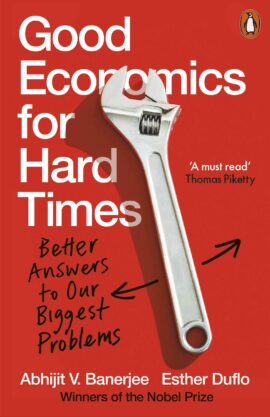
Good Economics for Hard Times: Better Answers to Our Biggest Problems
FROM THE WINNERS OF THE 2019 NOBEL PRIZE IN ECONOMICS'Wonderfully refreshing . . . A must read' Thomas PikettyIn this revolutionary book, prize-winning economists Abhijit V. Banerjee and Esther Duflo show how economics, when done right, can help us solve the thorniest social and political problems of our day. From immigration to inequality, slowing growth to accelerating climate change, we have the resources to address the challenges we face but we are so often blinded by ideology.Original, provocative and urgent, Good Economics for Hard Times offers the new thinking that we need. It builds on cutting-edge research in economics - and years of exploring the most effective solutions to alleviate extreme poverty - to make a persuasive case for an intelligent interventionism and a society built on compassion and respect. A much-needed antidote to polarized discourse, this book shines a light to help us appreciate and understand our precariously balanced world.
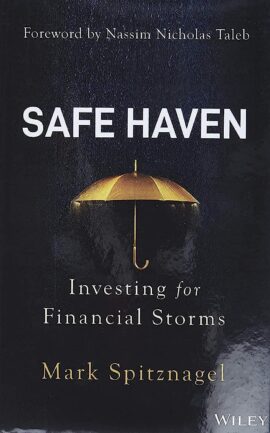
Safe Haven: Investing for Financial Storms
What is a safe haven?What role should they play in an investment portfolio? Do we use them only to seek shelter until the passing of financial storms? Or are they something more? Contrary to everything we know from modern financial theory, can higher returns actually come as a result of lowering risk? In Safe Haven, hedge fund manager Mark Spitznagel—one of the top practitioners of safe haven investing and portfolio risk mitigation in the world—answers these questions and more. Investors who heed the message in this book will never look at risk mitigation the same way again.
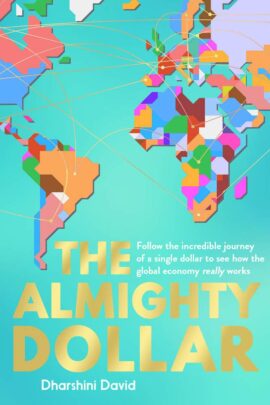
The Almighty Dollar: Follow the Incredible Journey of Single Dollar to See How the Global Economy Really Works
Have you ever wondered why we can afford to buy far more clothes than our grandparents ever could ... but may be less likely to own a home in which to keep them all? Why your petrol bill can double in a matter of months, but it never falls as fast? Behind all of this lies economics. It's not always easy to grasp the complex forces that are shaping our lives. But by following a dollar on its journey around the globe, we can start to piece it all together. The dollar is the lifeblood of globalisation. Greenbacks, singles, bucks or dead presidents: call them what you will, they are keeping the global economy going. Half of the notes in circulation are actually outside of the USA - and many of the world's dollars are owned by China. But what is really happening as our cash moves around the world every day, and how does it affect our lives? By following $1 from a shopping trip in suburban Texas, via China's central bank, Nigerian railroads, the oilfields of Iraq and beyond, The Almighty Dollar reveals the economic truths behind what we see on the news every day. Why is China the world's biggest manufacturer - and the USA its biggest customer? Is free trade really a good thing? Why would a nation build a bridge on the other side of the planet? In this illuminating read, economist Dharshini David lays bare these complex relationships to get to the heart of how our new globalised world works, showing who really holds the power, and what that means for us all.