
Right Kind of Wrong: Why Learning to Fail Can Teach Us to Thrive
3.900,00 د.ج
We All Fail Sometimes. Now, A World-leading Harvard Professor Reveals How These Failures Can Lead Us To Happier, More Successful Lives – Provided We Know How To Learn From Them. We Used To Think Of Failure As A Problem, To Be Avoided At All Costs. Now, We’re Often Told That Failure Is Desirable – That We Must ‘fail Fast, Fail Often’. The Trouble Is, Neither Approach Distinguishes The Good Failures From The Bad. As A Result, We Miss The Opportunity To Fail Well. Here, Amy Edmondson – The World’s Most Influential Organisational Psychologist – Reveals How We Get Failure Wrong, And How To Get It Right. She Draws On A Lifetime’s Research Into The Science Of ‘psychological Safety’ To Show That The Most Successful Cultures Are Those In Which You Can Fail Openly, Without Your Mistakes Being Held Against You. She Introduces The Three Archetypes Of Failure – Simple, Complex And Intelligent – And Explains How To Harness The Revolutionary Potential Of The Good Ones (and Eliminate The Bad). And She Tells Vivid Stories Ranging From The History Of Open Heart Surgery To The Columbia Space Shuttle Disaster, All To Ask A Simple, Provocative Question: What If It Is Only By Learning To Fail That We Can Hope To Truly Succeed?

We All Fail Sometimes. Now, A World-leading Harvard Professor Reveals How These Failures Can Lead Us To Happier, More Successful Lives – Provided We Know How To Learn From Them. We Used To Think Of Failure As A Problem, To Be Avoided At All Costs. Now, We’re Often Told That Failure Is Desirable – That We Must ‘fail Fast, Fail Often’. The Trouble Is, Neither Approach Distinguishes The Good Failures From The Bad. As A Result, We Miss The Opportunity To Fail Well. Here, Amy Edmondson – The World’s Most Influential Organisational Psychologist – Reveals How We Get Failure Wrong, And How To Get It Right. She Draws On A Lifetime’s Research Into The Science Of ‘psychological Safety’ To Show That The Most Successful Cultures Are Those In Which You Can Fail Openly, Without Your Mistakes Being Held Against You. She Introduces The Three Archetypes Of Failure – Simple, Complex And Intelligent – And Explains How To Harness The Revolutionary Potential Of The Good Ones (and Eliminate The Bad). And She Tells Vivid Stories Ranging From The History Of Open Heart Surgery To The Columbia Space Shuttle Disaster, All To Ask A Simple, Provocative Question: What If It Is Only By Learning To Fail That We Can Hope To Truly Succeed?
Produits similaires
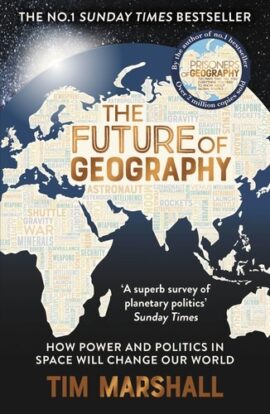
The Future of Geography
the new frontier, a wild and lawless place. It is already central to communication, economics, military strategy and international relations on Earth. Now, it is the latest arena for human exploration, exploitation – and, possibly, conquest. We’re heading up and out, and we’re taking our power struggles with us. China, the USA and Russia are leading the way.
From physical territory and resources to satellites, weaponry and strategic choke points, geopolitics is as important in the skies above us as it is down below. If you’ve ever wondered if humans are going back to the Moon, who will benefit from exploration or what space wars might look like, the answers are here.
With all the insight and wit that have made Tim Marshall the UK’s most popular writer on geopolitics, this gripping book shows how we got here and where we’re going, covering great-power rivalry; technology; commerce; combat in space; and what it means for all of us down here on Earth. This is essential reading on power, politics and the future of humanity.

In Cold Blood
An alternate cover of this ISBN can be found here.
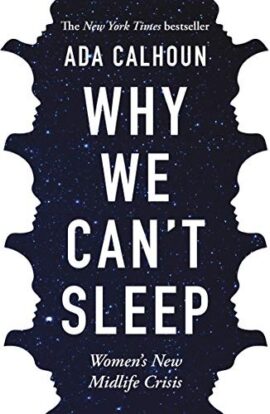
Why We Can’t Sleep: Women’s New Midlife Crisis
Calhoun decided to find some answers. She looked into housing costs, HR trends, credit card debt averages and divorce data. At every turn, she saw a pattern: sandwiched between the Boomers and the Millennials, Gen X women were facing new problems as they entered middle age, problems that were being largely overlooked.
Speaking with women across America about their experiences as the generation raised to 'have it all,' Calhoun found that most were exhausted, terrified about money, under-employed, and overwhelmed. Instead of their issues being heard, they were told instead to lean in, take 'me-time' or make a chore chart to get their lives and homes in order.
In Why We Can't Sleep, Calhoun opens up the cultural and political contexts of Gen X's predicament and offers solutions for how to pull oneself out of the abyss - and keep the next generation of women from falling in. The result is reassuring, empowering and essential reading for all middle-aged women, and anyone who hopes to understand them.

We Should All Be Feminists
What does “feminism” mean today? That is the question at the heart of We Should All Be Feminists, a personal, eloquently-argued essay – adapted from her much-viewed Tedx talk of the same name – by Chimamanda Ngozi Adichie, the award-winning author of ‘Americanah’ and ‘Half of a Yellow Sun’. With humour and levity, here Adichie offers readers a unique definition of feminism for the twenty-first century – one rooted in inclusion and awareness. She shines a light not only on blatant discrimination, but also the more insidious, institutional behaviours that marginalise women around the world, in order to help readers of all walks of life better understand the often masked realities of sexual politics. Throughout, she draws extensively on her own experiences – in the U.S., in her native Nigeria – offering an artfully nuanced explanation of why the gender divide is harmful for women and men, alike. Argued in the same observant, witty and clever prose that has made Adichie a best-selling novelist, here is one remarkable author’s exploration of what it means to be a woman today – and an of-the-moment rallying cry for why we should all be feminists.